







Busting Nutrition Myths — Article X of X

The Hidden World Within Us: What the Gut Microbiome Actually Does

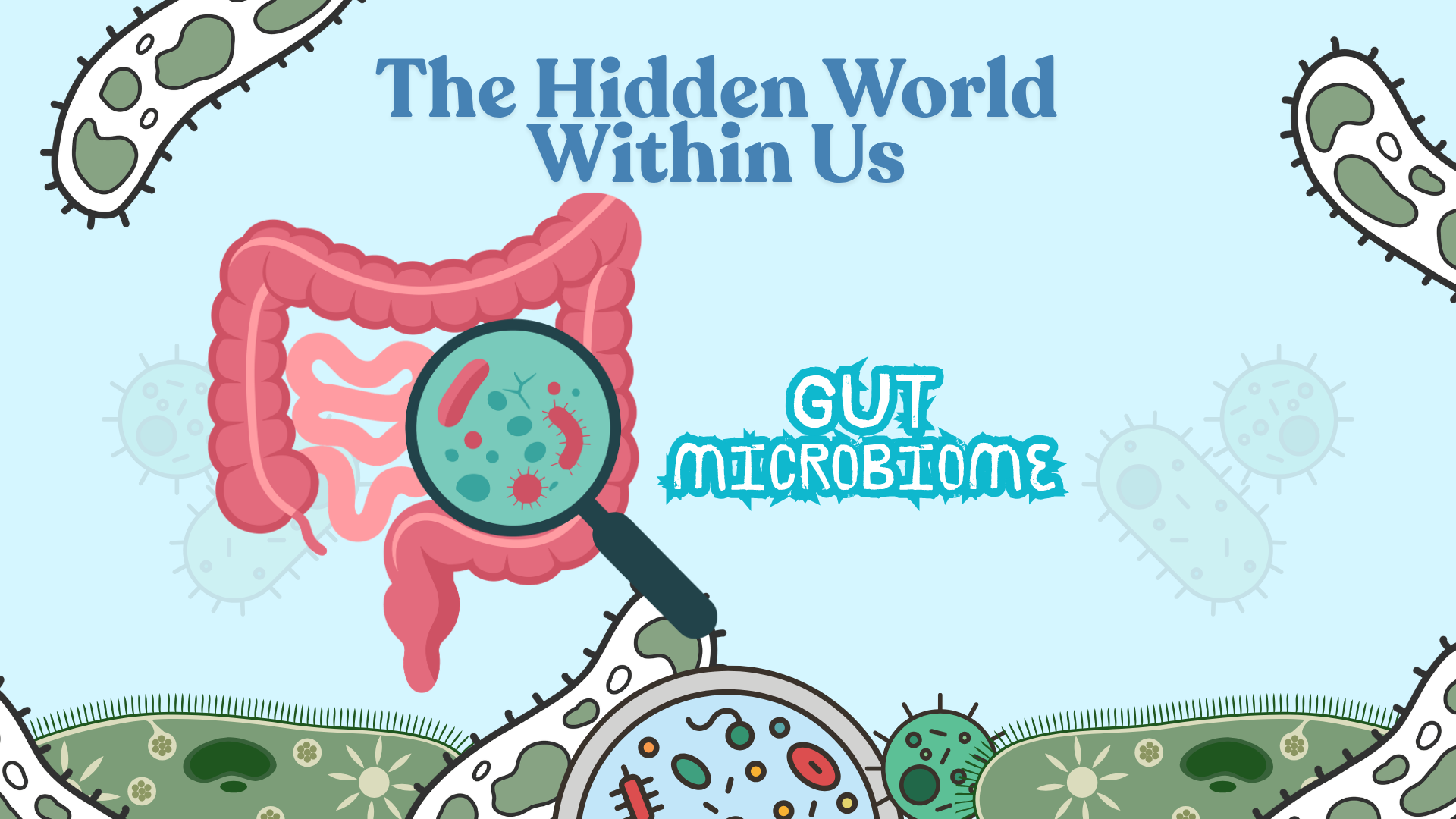
Illustration of the human colon and gut bacteria under magnification, representing the hidden microbial ecosystem of the gut microbiome.

THE CENTRAL IDEA

!
Your microbiome is not something separate from your diet.
The food reaching your colon selects which organisms prosper there.
Those organisms generate biological signals,
but your body remains the system interpreting those signals.

Trillions of bacteria live in your colon. They are not background noise. But they are not in charge of you either.

Throughout this Busting Nutrition Myths series, we have repeatedly encountered the same hidden participant: the gut microbiome.

The fats we eat influence populations of bile-tolerant bacteria.

The proteins we eat help determine whether the colon favors gentle fermenters or aggressive putrefiers.

Some vitamins and trace elements are synthesized, transformed, or activated through microbial activity before the body ever sees them.

So it is appropriate that we finish this series by addressing the microbiome directly.

And we need to begin by clearing away two opposing myths.

The Two Great Myths About the Microbiome

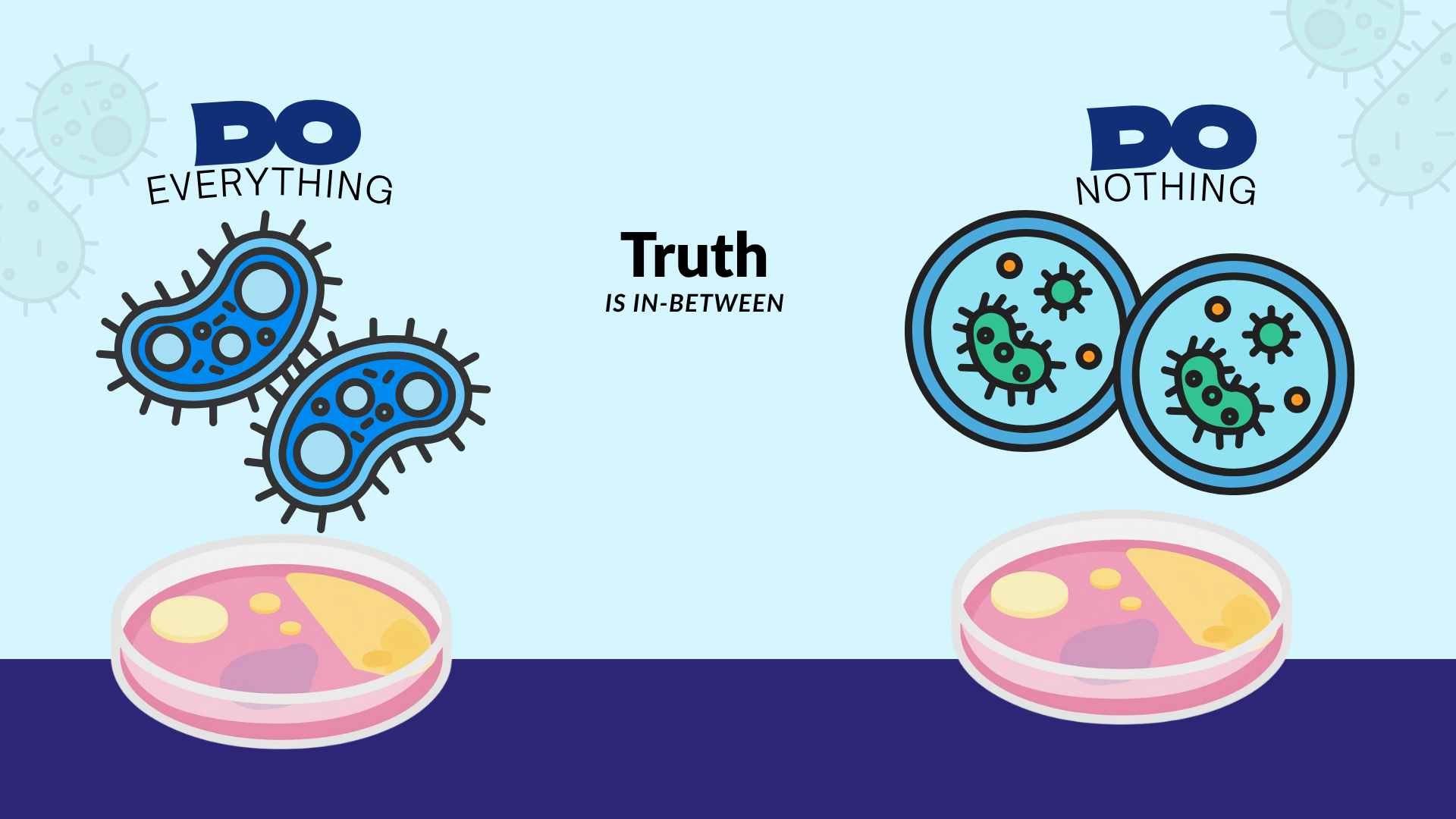
At one extreme is the belief that the bacteria living inside us are essentially irrelevant passengers.

At the other is the increasingly fashionable—and lucrative—idea that the microbiome is some kind of hidden master switch controlling our mood, weight, immunity, metabolism and future disease.

Neither position is correct.

The microbiome is neither irrelevant nor sovereign.

It is better understood as a distributed, metabolically active ecosystem producing metabolites, antigens and small molecules that interact continuously with the body.

The bacteria generate signals.

The host decides what those signals mean.

!
The microbiome is neither irrelevant nor sovereign.
It contributes; it does not command.
Illustration contrasting two gut microbiome myths: that bacteria control everything versus that they do nothing, with the truth shown between the two extremes.

When Microbiome Testing Outruns the Evidence

The enthusiasm surrounding the microbiome has created an industry around stool testing.

In 2021, the U.S. Department of Justice charged the founders of microbiome-testing company uBiome with fraud-related offenses associated with its clinical testing and insurance billing practices.

The case became an important warning about how quickly an interesting measurement technology can move into claims that exceed what the measurement can actually establish.

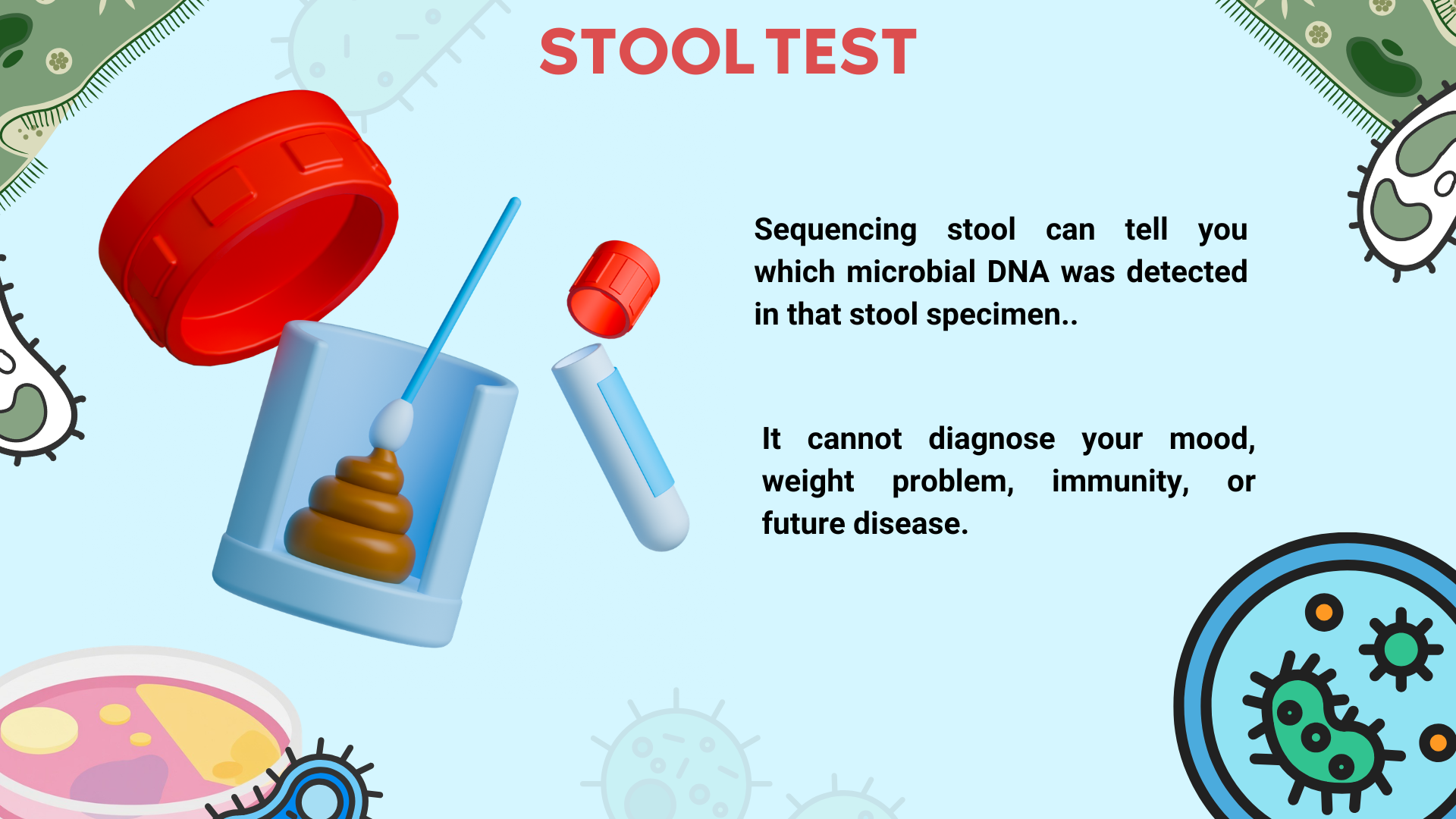
Sequencing stool can tell us which microbial DNA was detected in that particular stool specimen.

It does not automatically establish:

  • what those organisms are doing;
  • what is occurring elsewhere along the intestinal tract;
  • whether those organisms caused a particular condition;
  • whether the microbial pattern explains someone’s mood or body weight;
  • whether it diagnoses immune dysfunction;
  • or whether it predicts future disease.

A stool sample is information.

It is not a crystal ball.

!
A stool sample is information.
It is not a crystal ball.

What a Microbiome Stool Test Can — and Cannot — Tell You

Stool microbiome sequencing graphic showing microbial DNA detection while distinguishing measurement from interpretation, diagnosis and disease prediction.

A stool test can identify microbial DNA present in a specimen. It cannot, by itself, explain your mood, weight, immunity, or future disease risk.

One Logo - Dr. Bomi Joseph
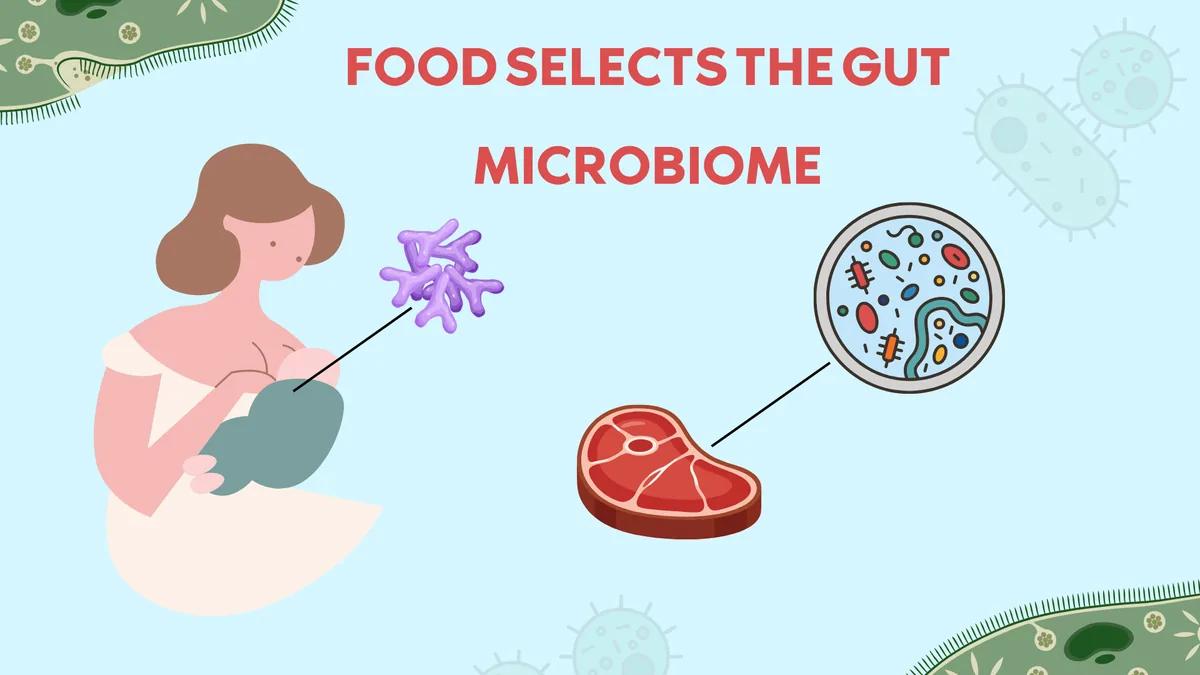
Illustration showing how different foods support different gut bacteria, emphasizing that diet helps determine which microbial populations flourish.

Bacteria Follow the Food Source — Not the Other Way Around

This may be the single most important principle for understanding the microbiome.

!
Change the substrate.
And you change which organisms can survive there at all.

Food Selects the Population

We see a remarkably clear example immediately after birth.

Breast milk contains lactose, but it also contains complex carbohydrates known as human milk oligosaccharides, or HMOs.

The remarkable thing about HMOs is that the infant cannot digest them.

So why are they there?

They provide substrate for organisms such as Bifidobacterium longum subsp. infantis, which possesses the machinery necessary to utilize them.

The baby feeds the bacteria.

The bacteria, in turn, help create the microbial environment characteristic of the breastfed infant gut.

This is symbiosis in one of its clearest forms.

Weaning Changes the Food — and Therefore Changes the Bacteria

Once solid foods are introduced, the substrate changes.

The microbial population changes with it.

The infant-specialized bacterial community begins giving way to the broader microbial population characteristic of the adult gastrointestinal tract.

The bacteria did not collectively decide to leave.

Their food source changed.

That principle continues throughout life.

A gut microbiome is not a population you feed a varied menu. It is a population that exists because of what you already eat. Change the substrate, and you change which organisms can survive there at all.

The Same Rule Continues in Adulthood

A high-fat diet provides an environment favorable to organisms adapted to bile and lipid metabolism.

Protein reaching the colon provides substrate for proteolytic organisms.

Fiber provides substrate for carbohydrate-fermenting organisms.

Therefore, before reaching for probiotics, supplements or microbiome tests, ask the simpler question:

What are you feeding the organisms already inside you?

Two Logo - Dr. Bomi Joseph

Most Healthy Bacteria Are Quiet Tenants — Until They Are Outcompeted

Many of the organisms associated with a healthy colon are metabolically gentle.

They ferment carbohydrates that human enzymes cannot digest and produce short-chain fatty acids, including:

  • butyrate,
  • acetate,
  • propionate

These metabolites are not meaningless waste products.

Butyrate, in particular, is an important energy source for colonocytes—the cells lining the colon.

These organisms live with us.

We feed them.

They give something useful back.

That is symbiosis.

Gentle Fermenters vs. Aggressive Putrefiers

The situation changes when large amounts of undigested protein reach the colon.

Proteolytic organisms now have abundant substrate.

These bacteria can expand rapidly and compete with the gentler fiber-fermenting population.

The result is a shift from predominantly saccharolytic fermentation toward increased proteolytic fermentation—or putrefaction.

And that distinction matters.

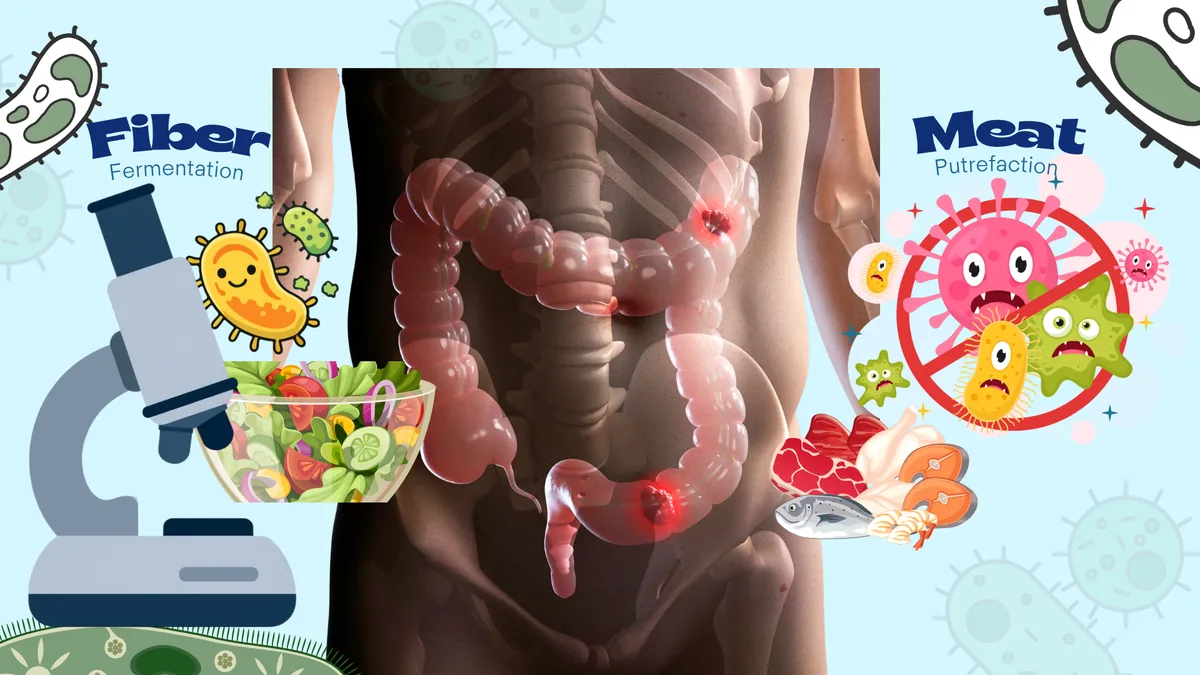
Illustration comparing beneficial fiber fermentation with meat protein putrefaction in the colon and their different effects on gut bacteria.

A Remarkable Human Diet-Swap Experiment

A particularly illuminating demonstration came from a 2015 Nature Communications study comparing African Americans with rural South Africans.

The two populations historically showed dramatically different colorectal cancer risks.

Researchers exchanged their diets for two weeks.

African American participants received a high-fiber, lower-fat diet.

Rural South African participants received a higher-fat, lower-fiber Western-style diet.

The changes were remarkably rapid.

Increased fiber intake was accompanied by:

• greater saccharolytic fermentation;
• greater butyrate production.
The higher-fat, lower-fiber diet produced movement in the opposite direction: • more proteolytic fermentation;
• increased secondary bile acid production.

Markers associated with colorectal cancer risk changed along with the metabolic environment.

The lesson is straightforward:

Change the food and you can rapidly change the ecosystem.

Three Logo - Dr. Bomi Joseph

Where Protein Goes Wrong — What Happens Past the Ileum

Protein digestion is supposed to occur primarily before food reaches the colon.

It is a relay.

Protein encounters pepsin in the stomach.

Then come pancreatic enzymes in the small intestine:

  • trypsin;
  • chymotrypsin;
  • carboxypeptidases

Brush-border peptidases continue the process.

Ideally, the work is substantially completed by the end of the ileum.

What Happens When Protein Reaches the Colon?

If significant peptide material escapes small-intestinal digestion, it enters an environment very different from the stomach and small intestine.

Proteolytic bacteria can ferment those residual peptides.

This process—properly called putrefaction—can generate substances including:

  • ammonia;
  • amines;
  • phenols;
  • indoles;
  • hydrogen sulfide.

Several of these compounds can be irritating or damaging to colonic epithelial cells when exposure becomes substantial or persistent.

Now consider the combination frequently seen in modern diets:

High protein + high fat + low fiber.

That combination does two things simultaneously.

It supplies substrate to organisms capable of proteolytic metabolism while reducing the fibrous bulk that would otherwise accelerate movement through the colon.

The colon then spends more time exposed to the products of that metabolism.

!
The colon was built to absorb water and harden stool.
It was not built to be a second stomach for the protein your small intestine failed to finish.
Four Logo - Dr. Bomi Joseph
ROUGH IT®

Rough It® — The Case for Insoluble Fiber

This brings us back to one of the central themes running throughout this entire series.

Rough It®.

Not everything we eat needs to be digestible.

In fact, some of the most important material entering our gastrointestinal tract provides virtually no conventional caloric nutrition at all.

Insoluble Fiber Works Mechanically

Insoluble fiber works differently from soluble fiber.

It does not primarily function by supplying calories.

It adds bulk.

It retains water.

It helps stimulate intestinal movement.

It reduces transit time.

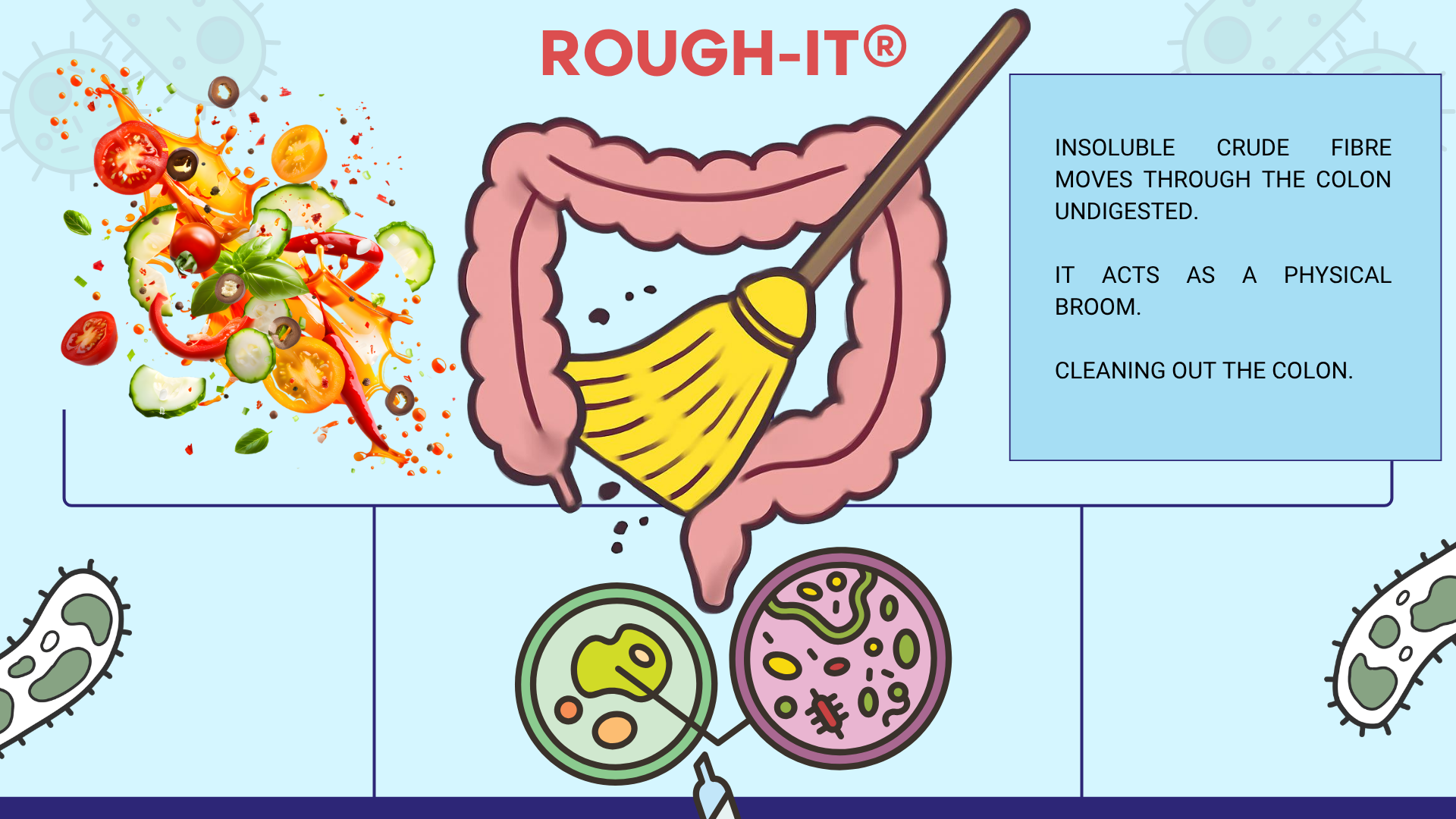
Functionally, it behaves like a broom moving material through the colon.

That mechanical function is routinely underestimated because modern nutrition tends to ask:

What nutrient does this food provide?

Sometimes the better question is:

What work does this food make the gastrointestinal tract perform?

Colon illustration with fiber-rich whole foods demonstrating the Rough It® principle of insoluble fiber increasing bulk and helping move waste through the colon.

Soluble and Insoluble Fiber Work Together

Soluble and insoluble fiber should not be treated as competing forms of nutrition.

They perform complementary jobs.

Soluble Fiber

Soluble fiber provides fermentable substrate for beneficial saccharolytic organisms.

Those organisms produce metabolites including butyrate.

Soluble fiber feeds.

Insoluble Fiber

Insoluble fiber increases bulk and accelerates physical movement through the intestinal tract.

It reduces the time undesirable compounds remain in contact with the colon wall.

Insoluble fiber clears.

Together they provide both biological and mechanical support.

That is why whole plant foods are so powerful.

Nature generally provides both.

!
Soluble fiber feeds.
Insoluble fiber clears.
You need both.
Five Logo - Dr. Bomi Joseph

You Do Not Need Live Bacteria to Get Sick

There is another microbiological principle the public often misunderstands.

Killing bacteria does not necessarily eliminate the danger they created.

Some organisms manufacture toxins while growing in food.

Those toxins can remain after the organism itself has been killed.

The Reheated Rice Example

Two important organisms are:

Staphylococcus aureus and Bacillus cereus.

These organisms can produce heat-stable toxins.

A classic example is improperly handled cooked rice.

Rice is cooked. It is then allowed to remain warm or cool too slowly.

Bacteria multiply.

Toxins are produced.

Later, the rice is reheated.

The reheating may kill the bacteria.

But the toxin may remain.

The lesson is important:

Food safety is not merely about killing bacteria before you eat something. It is about preventing bacteria from having enough time to manufacture toxins in the first place.

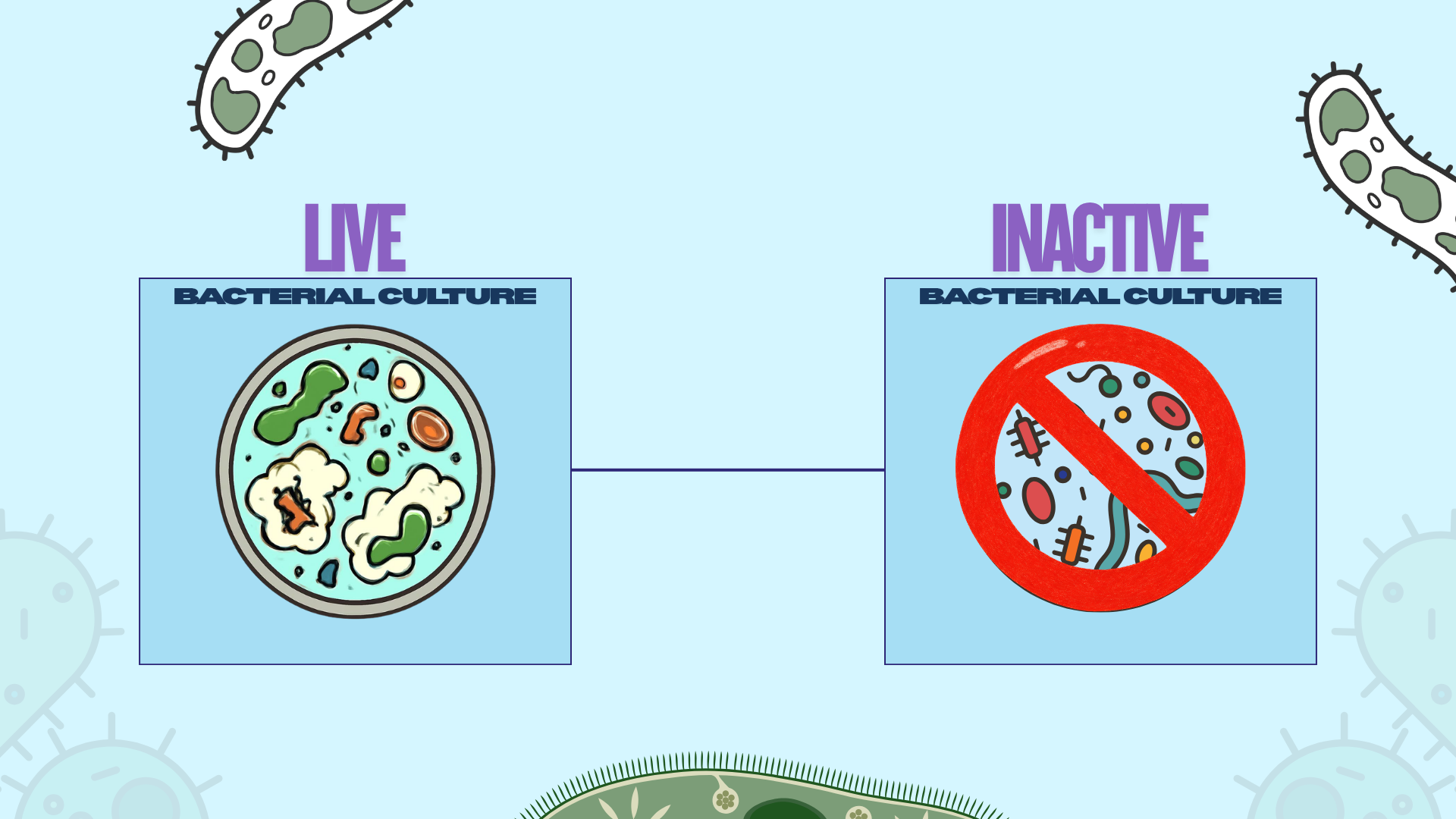
Illustration comparing live bacterial cultures with inactive bacteria after heat treatment in fermented foods.

Why “Live and Active” Actually Matters

Living beneficial organisms can participate in:

  • competitive exclusion of pathogens;
  • colonization resistance;
  • ongoing fermentation;
  • continuous production of microbial metabolites.

This is why the label on fermented foods deserves scrutiny.

If yogurt or kefir is “heat-treated after culturing,” it has undergone another heat treatment after fermentation.

That improves shelf stability.

But it can also kill the organisms produced during fermentation.

You may still be buying fermented food.

You may not be buying viable cultures.

Those are not the same thing.

Six Logo - Dr. Bomi Joseph

But You Do Need Live Bacteria to Stay Well

Now consider the opposite situation.

When we intentionally consume fermented foods for their bacterial cultures, viability matters.

A living organism can continue interacting with its environment.

A dead bacterial fragment cannot perform every function of a viable organism.

The Logic Behind Bomi Bug Concentrate and Deep Health® Drink

This is also the logic behind Bomi Bug Concentrate and Deep Health® Drink.

The objective is not merely to manufacture something that was once fermented.

The culture is fermented fresh and kept alive rather than being pasteurized into shelf stability.

If the benefit you seek depends upon living organisms, then whether those organisms remain alive is not a trivial detail.

It is the point.

!
Do not expect a probiotic capsule to continually overcome a diet feeding the opposite bacterial population.
Substrate wins.
Seven Logo - Dr. Bomi Joseph

What the Microbiome Actually Is — Signal, Not Sovereign

So what does the microbiome actually do?

A great deal.

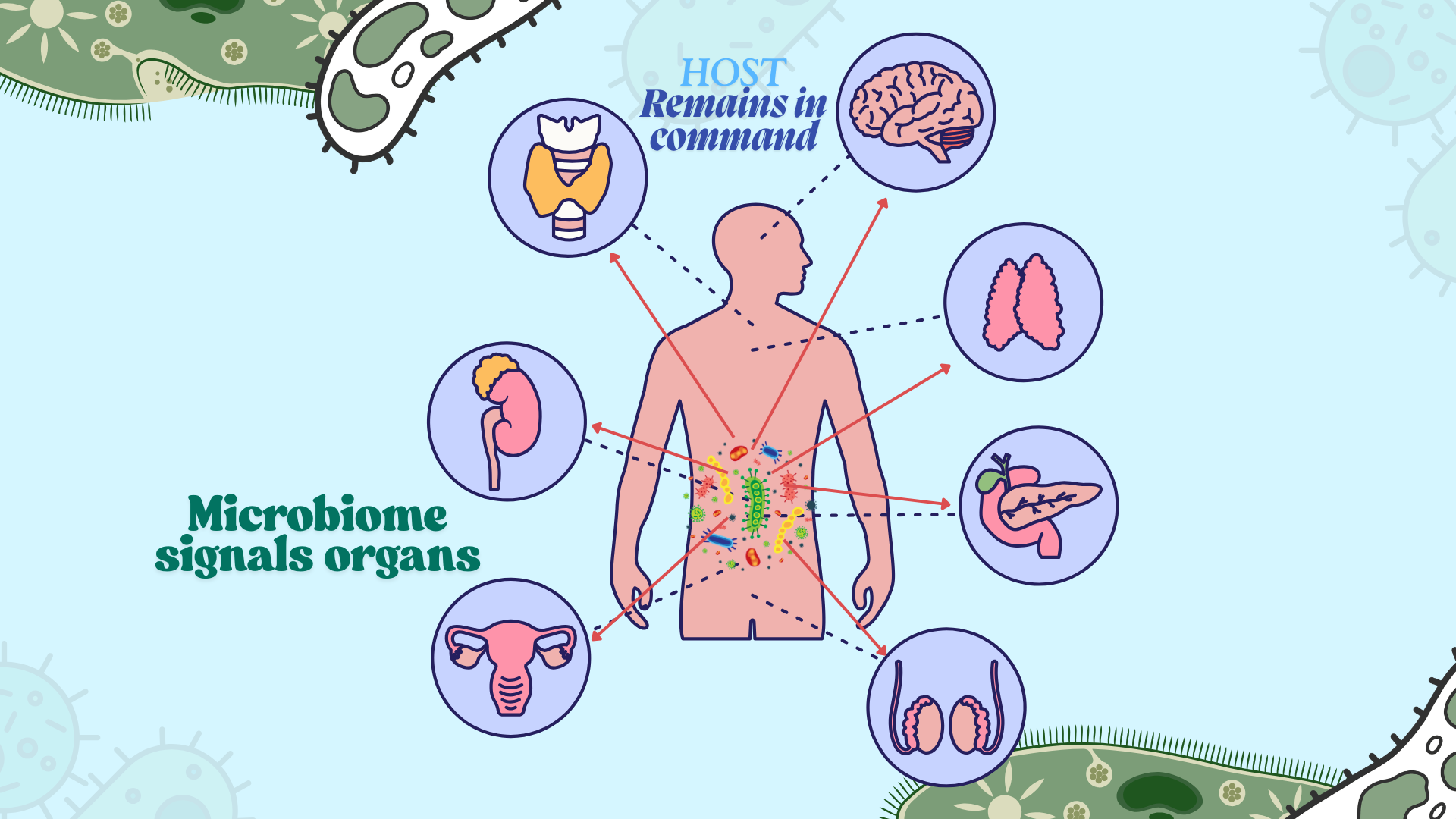
Microbial activity interacts with human physiology through multiple channels.

These include:

  • short-chain fatty acids affecting the colonic epithelium;
  • secondary bile acids interacting with receptors in the liver and gut;
  • bacterial production of vitamin K and some B vitamins;
  • microbial antigens interacting with the mucosal immune system;
  • small molecules communicating through enteroendocrine pathways;
  • signaling associated with the vagus nerve and gut-brain communication.

The microbiome therefore deserves to be taken seriously.

It is a large, distributed, metabolically active signaling ecosystem.

But that does not make it the body’s operating system.

!
The microbiome is a large and legitimate input into human physiology.
It is not the operating system.
The Microbiome Is a Signal — Not the Operating System - Dr. Bomi Joseph
From above of decorative cardboard applique of round shaped cell with various microbes and viruses on yellow background

Association Is Not the Same as Control

This distinction is particularly important because microbiome research frequently finds associations.

People with condition X may have more of bacterial species A.

People with condition Y may have less of bacterial species B.

Interesting?

Certainly. Proof that bacterium A caused condition X?

No.

Disease itself can alter:
• diet;
• medication use;
• intestinal transit;
• immune activity;
• metabolism.

Any of those could change the microbiome.

The bacterial pattern may therefore be a result, rather than a cause.

Or the disease and microbial shift may both arise from the same upstream factor.

Correlation is useful information.

It is not automatically causation.

child, girl, face, eyes, pretty, portrait, naughty, close up, black-and-white, human, head, person, female, people, face, black-and-white, black-and-white, human, human, human, human, human, people, people

The Host Still Decides What the Signals Mean

The human body contains regulatory systems developed across an evolutionary history far longer than our current understanding of the microbiome.

These include:
• immune tolerance;
• hepatic metabolism and detoxification;
• endocrine feedback loops;
• neural regulation;
• epithelial barriers;
• inflammatory controls.

Microbial signals enter these systems.

The host interprets them.

The microbiome is a large and legitimate input into human physiology. It is not the operating system. The host remains in charge of what its signals are allowed to mean.

!
Listen to what they are signaling.
Do not hand them the microphone.

Six Practical Principles for Microbiome Intelligence

1. Feed the Population You Want

Do not expect a probiotic capsule to continually overcome a diet feeding the opposite bacterial population.

Substrate wins.

Fiber supports carbohydrate-fermenting organisms.

Undigested protein supports proteolytic organisms.

2. Eat Both Types of Fiber

Soluble fiber feeds beneficial fermentation.

Insoluble fiber physically moves material through the colon.

Do not choose between them.

Eat both.

3. Total Protein Is Not the Same as Digested Protein

What matters to the colon is not merely how much protein entered the mouth.

What matters is how much remained undigested when intestinal contents reached the colon.

4. Read Fermented-Food Labels Carefully

If the label says:

“Heat-treated after culturing,”

understand what that means.

The organisms you expected to consume alive may no longer be alive.

5. Cooking Does Not Necessarily Destroy Preformed Toxins

Good food safety begins with controlling time and temperature before bacterial toxins are produced.

Reheating spoiled or badly stored food is not a universal rescue strategy.

6. Do Not Let a Stool Test Diagnose Your Life

Microbiome sequencing can provide useful information.

But it remains one biological signal among many.

Treat it accordingly.

The Bottom Line

The microbiome matters enormously.

It participates in digestion.

It produces metabolites.

It interacts with immunity.

It influences the colonic environment.

It responds remarkably quickly to what we eat.

But much of the mythology surrounding the microbiome reverses cause and effect.

We do not merely inherit a mysterious bacterial population that independently decides our health.

We continually select that population through the environment we create inside our digestive tract.

Feed gentle organisms and they flourish.

Feed aggressive organisms and they flourish.

Give the colon sufficient roughage and accelerate transit.

Remove that roughage and allow residues to remain longer.

The microbiome is constantly talking to the human body.

We should listen.

But we should understand who is speaking—and who remains in charge.

!
Ten trillion organisms live inside you,
responding to what you feed them
and speaking constantly to the rest of your body.
Listen to what they are signaling.
Do not hand them the microphone.
ROUGH IT®
Educational guidance only. Not medical advice. 0 / 240