

Dr. Bomi Joseph-
The most expensive urine in the world is produced by people who believe that if a little vitamin is good, a great deal more must be a lot better.
Watch: Essential Vitamins—Why More Is Not Always Better
This two-minute summary explains the central principle. The complete evidence, thresholds and practical guidance continue below.
Every vitamin bottle on every pharmacy shelf implies the same quiet promise: more coverage, more insurance, more health. The idea is intuitive. It is also wrong. Vitamins do not behave like savings; they behave like drugs, each with its own dose-response curve, storage depot, and threshold beyond which benefit reverses into harm.
The pattern is not new. It is one of the oldest observations in toxicology, and it applies equally to a nutrient the body cannot synthesise and to a poison it has never encountered. This article sets out that pattern, distinguishes the two fundamentally different chemistries — water-soluble and fat-soluble — that determine how forgiving excess will be, and confronts the way most people overshoot in the real world: not through one supplement taken to excess, but through several ordinary sources quietly stacking on top of one another.
At A Glance
- Every essential vitamin has an optimal physiological range.
- Water-soluble vitamins are more readily cleared, but they are not harmless at every dose.
- Fat-soluble vitamins accumulate and are therefore less forgiving.
- The most common real-world problem is supplement stacking.
- The correct sequence is to measure, correct, retest, and maintain.
Table of Contents
Part I: The Shape of the Curve
In 1538, Paracelsus wrote what remains the governing sentence of toxicology: sola dosis facit venenum—the dose makes the poison.
Four centuries later, the French chemist Gabriel Bertrand formalised the same principle specifically for essential vitamins and nutrients in what is now known as Bertrand’s Law. For every essential element, there is a defined range of intake compatible with optimal biological function. Departure from that range in either direction—not merely upward—produces dysfunction and disease.
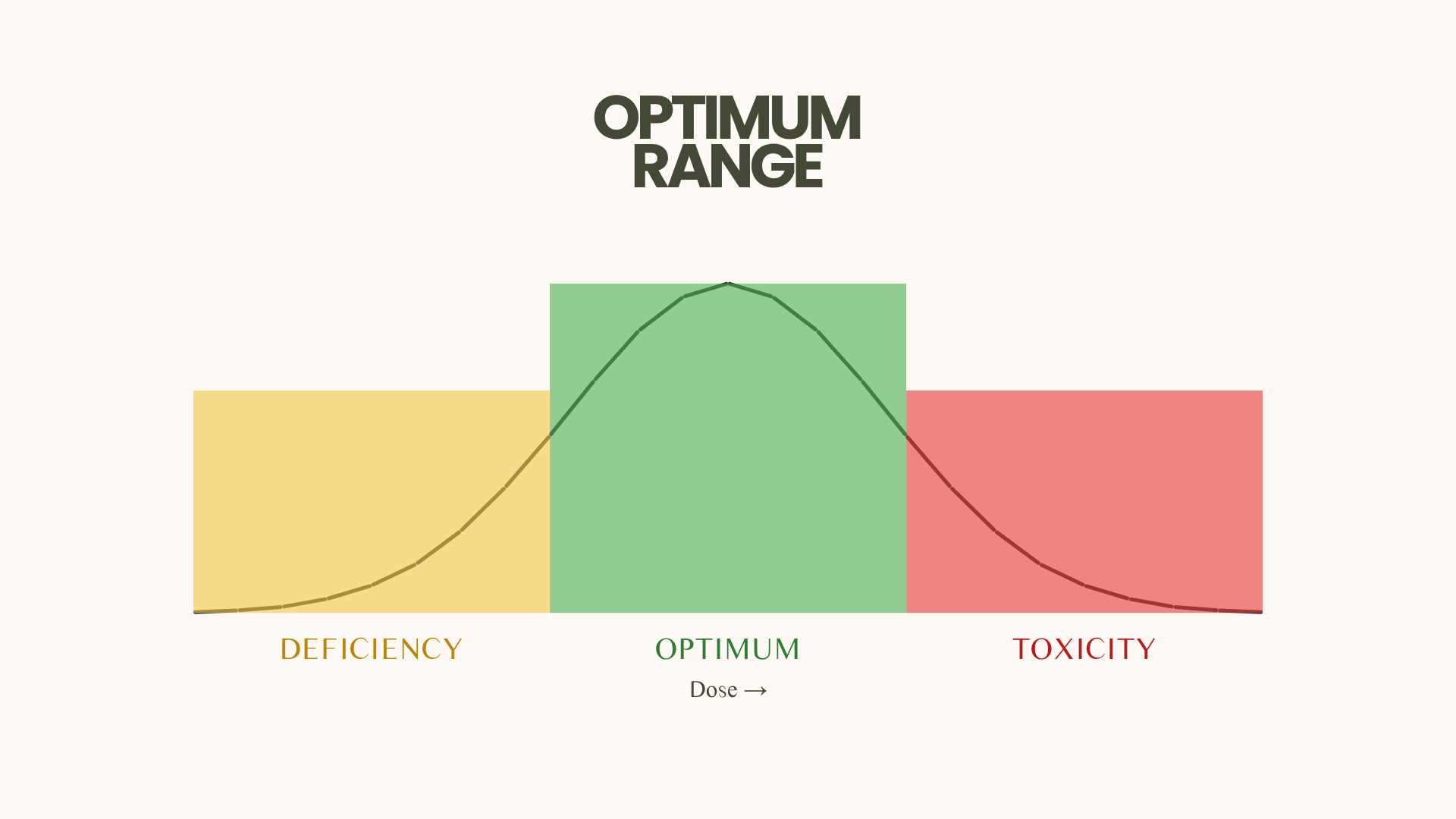
Too little is bad. Too much is bad. The optimal level lies in a narrow trough between two failure states—not at the top of a scale you climb by taking more.

Dr. Bomi Joseph
The Peak Health Center
In toxicology, this relationship is graphed as an inverted U-shaped, or biphasic, dose-response curve. In this context, essential is not a synonym for safe at any dose. The curve resolves into three continuous phases.
Every essential vitamin has an optimal physiological range. Below it lies deficiency; beyond it lies toxicity.
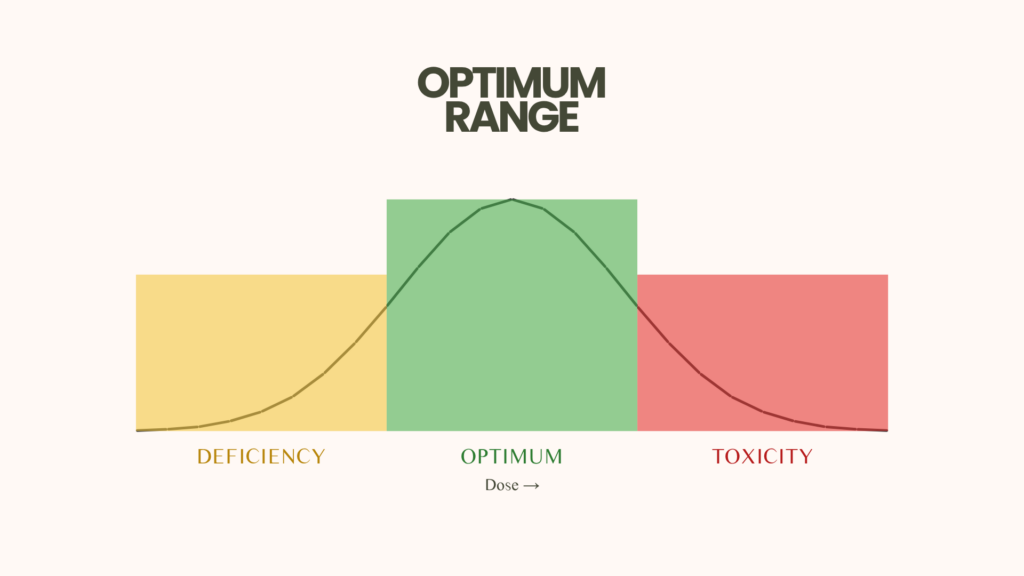
Three phases of the vitamin dose-response curve
| Phase | What Happens | Clinical Signature |
|---|---|---|
| Deficiency | Intake falls below the threshold required to sustain normal enzymatic and structural function.. | Scurvy, beriberi, pellagra, rickets, xerophthalmia, and pernicious anaemia — the classic textbook diseases.. |
| Adequacy (optimal) | Intake remains within the narrow physiological range in which tissue stores and enzyme systems are fully, but not excessively, saturated.. | No symptoms. This is where the overwhelming majority of people eating a varied diet already sit.. |
| Toxicity | Intake exceeds the body's ability to excrete, buffer, or store the nutrient safely, and the excess begins to interfere with other pathways.. | Hepatotoxicity, hypercalcemia, coagulopathy, peripheral neuropathy, or kidney stones — depending on the vitamin.. |
This is the framework for the rest of the article. It is also the framework that a 2005 paper in Proceedings of the Royal Society B extended from trace minerals to macronutrients more broadly.
Biology does not distinguish neatly between categories of nutrient. It distinguishes between too little, enough, and too much.
Part II: Two Different Chemistries
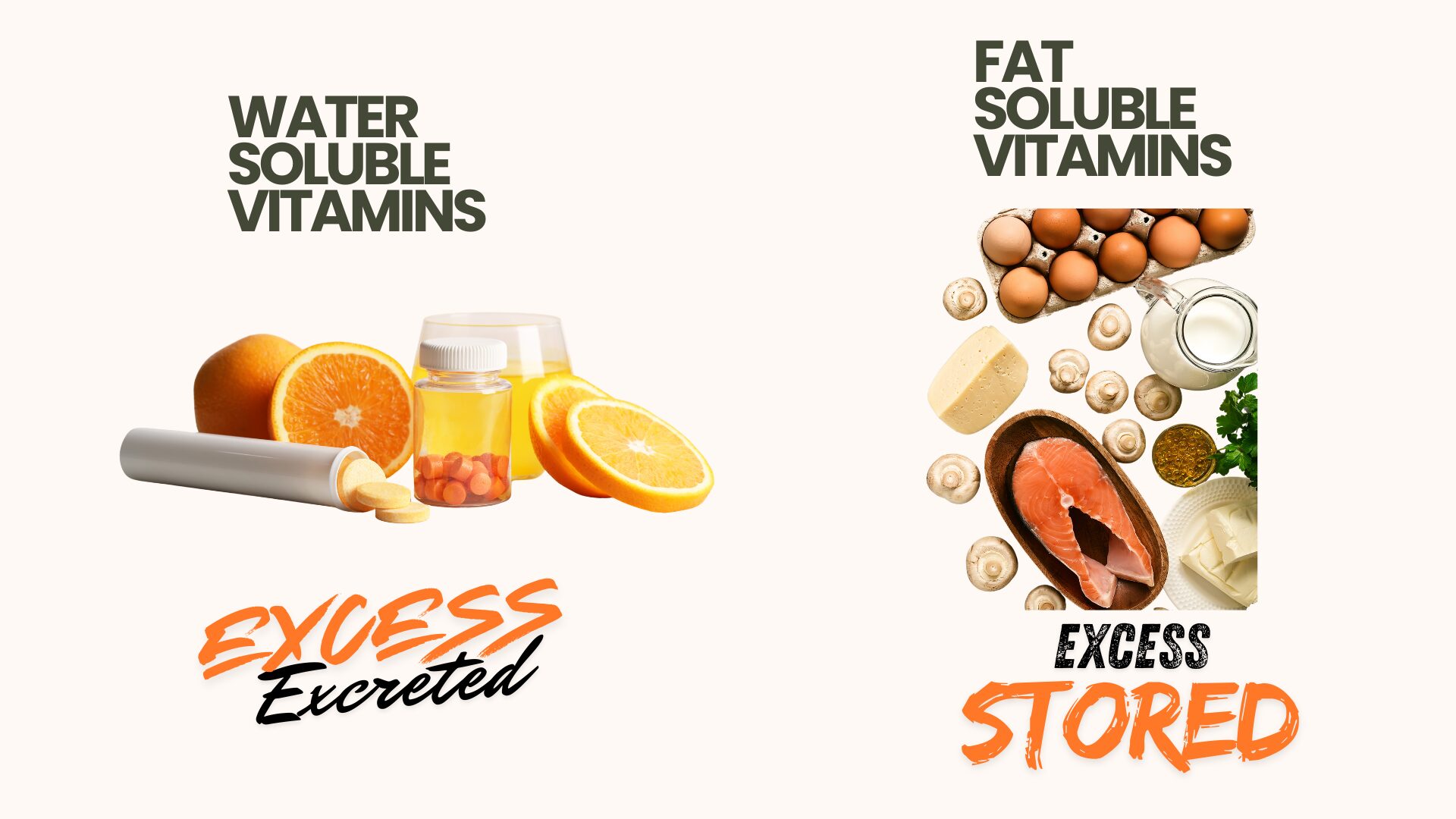
Not all essential vitamins become harmful in the same way when intake exceeds the optimal range. The critical variable is what the body does with the excess — and that is determined by solubility.

Water-Soluble Vitamins: Cleared, But Not Harmless
The B-complex vitamins and vitamin C dissolve in the body’s aqueous compartment. What the kidneys cannot use, they filter and excrete. That is why a high-dose B-complex supplement can turn urine fluorescent yellow within the hour, courtesy of unmetabolised riboflavin. For most people, most of the time, the folk wisdom is correct: intake beyond what the body requires produces expensive urine, not stored benefit.
That folk wisdom, however, is often overstated as an absolute rule. Water-soluble vitamins are cleared more readily than their fat-soluble counterparts, but they are not cleared instantly, completely, or without consequence when high doses are sustained.
| Vitamin | Where It Turns Harmful | Mechanism |
|---|---|---|
| B6 (pyridoxine) | Chronic doses of 1–6 g/day sustained for 12–40 months; regulatory bodies set upper limits between 12 and 100 mg/day, depending on jurisdiction. | Accumulates in the blood for weeks and produces a slowly progressive sensory peripheral neuropathy that can be irreversible. |
| B3 (niacin) | Flushing from as little as 30–50 mg; hepatotoxicity described near 3 g/day. | Vasodilation causes flushing; sustained high dosing raises transaminases and, at the extreme, causes liver injury. |
| Folate / folic acid | High-dose supplementation and food fortification, particularly in people with undiagnosed B12 deficiency. | Corrects the anaemia of B12 deficiency while allowing the underlying neurological damage to progress silently. |
| C (ascorbic acid) | Sustained intake above roughly 1–2 g/day. | Partial metabolism to oxalate raises the risk of calcium-oxalate kidney stones in susceptible individuals. |
The relevant thresholds are drawn from the NIH Office of Dietary Supplements vitamin B6 fact sheet, the StatPearls review of niacin toxicity, the clinical literature on folic acid masking vitamin B12 deficiency, and case reports of vitamin C-induced oxalate nephropathy.
The correction to the folk wisdom is precise, not sweeping. Water-soluble vitamins are far more forgiving than fat-soluble vitamins, and for most healthy people taking a standard multivitamin, the excess is genuinely wasted rather than harmful. But water-soluble is not synonymous with no upper limit. Treating it that way is how the rarer, but very real, toxicities above occur.
Fat-Soluble Vitamins: Stored, and Therefore Unforgiving
Vitamins A, D, E, and K dissolve in lipid rather than water. They are absorbed with dietary fat, transported in lipoproteins, and — critically — stored in the liver and adipose tissue instead of being excreted when supply exceeds immediate need. That storage is precisely what makes them dangerous in excess. The body has no efficient overflow valve, so repeated intake above requirement accumulates quietly, week after week, until stores cross a threshold and toxicity appears — sometimes abruptly, and sometimes long after the responsible dose was taken.
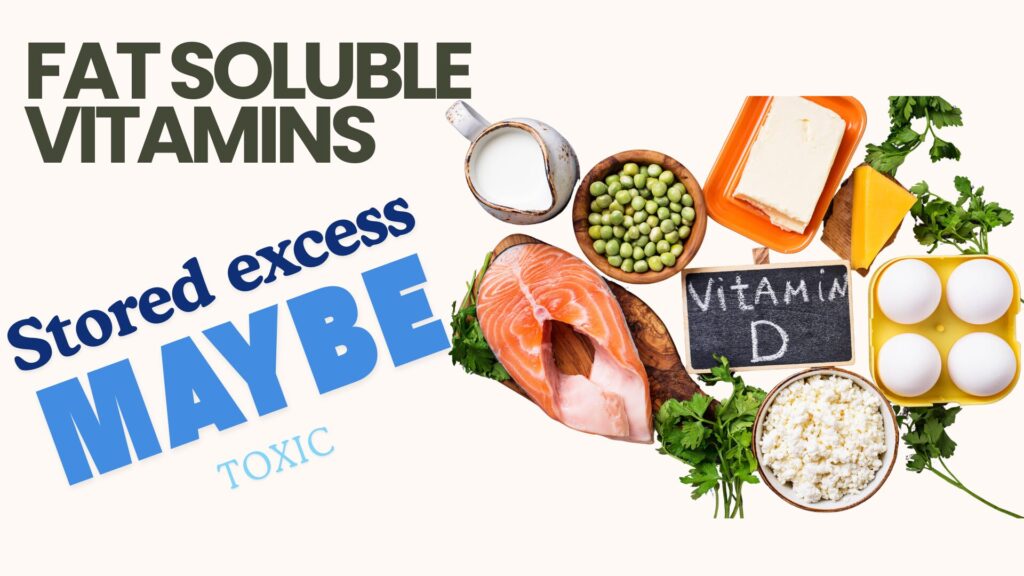
| Vitamin | Adult Upper Limit | What Excess Does |
|---|---|---|
| A (retinol) | ≈3,000 mcg RAE/day (≈10,000 IU). | Acute toxicity above roughly 100× the RDA causes raised intracranial pressure, headache, and blurred vision. Chronic excess causes liver injury, bone and joint pain, and — in pregnancy — birth defects. Prescription retinoids (e.g., isotretinoin) are pharmacologic vitamin A derivatives and carry the same class of risk under medical supervision.. |
| D (calciferol) | 4,000 IU/day (dietary reference intake); sustained intakes above 10,000 IU/day are the usual threshold for clinical toxicity. | Hypercalcemia — nausea, confusion, polyuria, and, if prolonged, nephrocalcinosis and renal impairment. |
| E (tocopherol) | 1,000 mg/day. | Interferes with vitamin K-dependent clotting-factor activity and increases bleeding risk, particularly when combined with warfarin or antiplatelet agents. |
| K (phylloquinone/menaquinone) | No established upper limit; no known toxicity for K1 or K2 in either form. | The principal concern is not toxicity but drug interaction: it opposes the action of warfarin and interacts metabolically with vitamin E. |
These figures are drawn from the NIH Office of Dietary Supplements vitamin A fact sheet, the clinical review of vitamin D toxicity, the Merck Manual entry on vitamin E toxicity, and the Linus Pauling Institute’s vitamin K monograph.

Vitamin deficiency is a genuine and well-described disease category. So is vitamin excess. They are mirror images of the same failure to respect the curve.
Part III: The Real-World Problem Is Rarely One Product. It Is Stacking.
Almost no one sets out to take a toxic dose of an essential vitamin. Outside deliberate megadosing, toxicity is usually the arithmetic sum of several individually reasonable decisions, none of which appears excessive in isolation:
- A daily multivitamin, dosed to roughly 100% of the reference intake for most nutrients
- A standalone A-D-E-K supplement, taken ‘to be safe’ or on the advice of a trainer or influencer
- A prescription vitamin D or vitamin A derivative, prescribed for an unrelated dermatological or endocrine indication
- A fortified protein powder or meal-replacement shake, supplying a full day’s micronutrient allowance per serving
- Cod liver oil or desiccated liver, both naturally concentrated sources of preformed vitamin A
- Fortified breakfast cereals, dairy products, or drinks, each contributing its own quiet fraction
- An ‘immune,’ ‘bone,’ ‘vision,’ or ‘longevity’ formula, often containing several of the same ingredients under a different marketing name

No single item on that list is labelled dangerous, because no single item is necessarily dangerous in isolation. Each product label is calculated as though that product were the only source of the nutrient in a person’s day. That is a reasonable assumption for a regulator writing one label. It is a false assumption for a person taking four or five products simultaneously. This arithmetic matters most with fat-soluble vitamins because there is no efficient excretion route to absorb the error.
Consider a multivitamin supplying 100% of the vitamin A reference intake, layered with a standalone A-D-E-K capsule supplying another full day’s dose, a serving of fortified breakfast cereal, and an occasional spoonful of cod liver oil. Together, these can carry a person well past the adult upper limit of roughly 3,000 mcg RAE — without a single product on the shelf appearing irresponsible and without the person ever consciously deciding to take ‘extra’ vitamin A.
Vitamins are not a scale you climb by taking more. They are a narrow window you locate by measuring — and then hold.
Part IV: Don't Guess. Measure.
The correct response to this arithmetic is neither to abandon supplementation reflexively nor to embrace it indiscriminately. It is to replace assumption with measurement.
Most people eating a reasonably varied diet in a country with fortified staple foods are already at or near the optimal range for most vitamins and require no supplementation at all. The exceptions are specific and identifiable, not universal: vitamin D in people with limited sun exposure; vitamin B12 in older adults, strict vegans, and those taking long-term acid-suppressing medication; and folate in women who may become pregnant. There is no need to guess which category you fall into. The relevant blood tests — serum 25-hydroxyvitamin D, serum B12 with methylmalonic acid when the result is equivocal, and red-cell or serum folate — are inexpensive, widely available, and definitive.
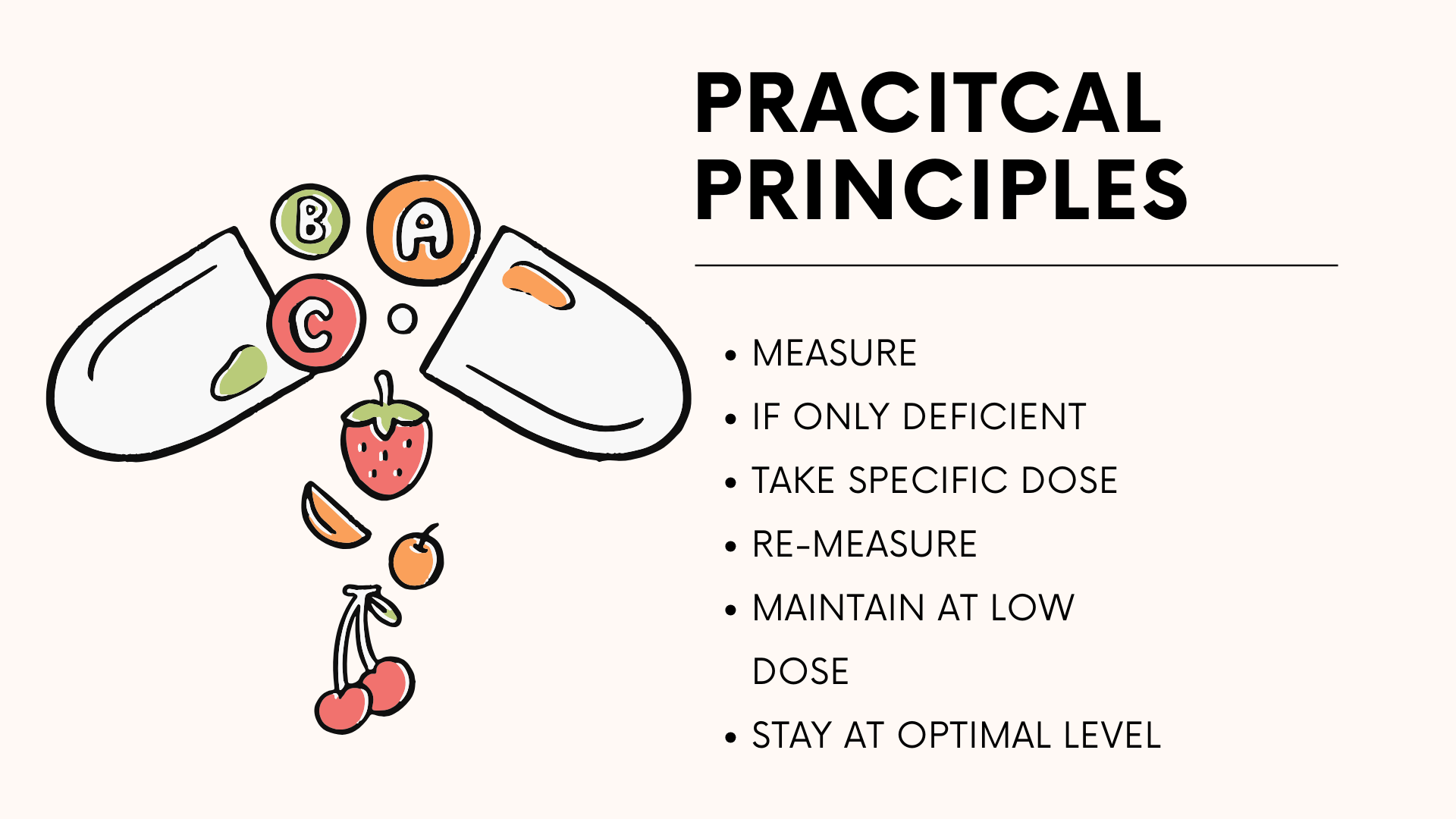
The correct sequence is therefore simple: measure; correct if, and only if, a deficiency is confirmed; retest; and then maintain at the low end of the sufficient range rather than the high end of ‘just in case.’ The optimal level on Bertrand’s curve is a trough of safety, not a ceiling to be maximised. Chasing the top of the reference range provides no additional benefit and, particularly with fat-soluble vitamins, measurably narrows the margin of safety.
Practical Principles for Intelligent Vitamin Use
- Test before you supplement. A blood test costs less than a year of unnecessary pills and removes the guesswork entirely.
- Treat a documented deficiency, not a suspicion. Supplement to correct a measured gap, then retest to confirm that you have reached — and not overshot — the optimal range.
- Audit your stack, not just your supplement drawer. Add up every fortified food, shake, and ‘insurance’ formula in your week before assuming that any one product is safe in isolation.
- Respect the difference between water-soluble and fat-soluble risk. Excess B vitamins and vitamin C are more forgiving, but not limitless. Excess vitamins A, D, E, and K can accumulate silently and demand real caution.
- Do not confuse a prescription retinoid or high-dose vitamin D protocol with a routine supplement. These are pharmacologic doses. They belong under medical supervision and must be counted explicitly against every other source.
- Maintain, don’t maximise. Once you have reached the optimal point on the curve, more is not additional insurance — it is the first step down the other side.
Vitamins are not health insurance.
Measure what you need.
Replace only what you lack.
And stop before benefit becomes poison.