Busting Nutrition Myths · Article IX

Essential Trace Elements: The Minerals Modern Diets Get Wrong

Trace elements are needed in quantities smaller than a grain of salt, yet their absence or excess can reshape the thyroid, the heart, and the nervous system. Trace elements are the most neglected chapter in popular nutrition — precisely because the doses involved sound too small to matter.
By Dr. Bomi Joseph, MD, PhD.
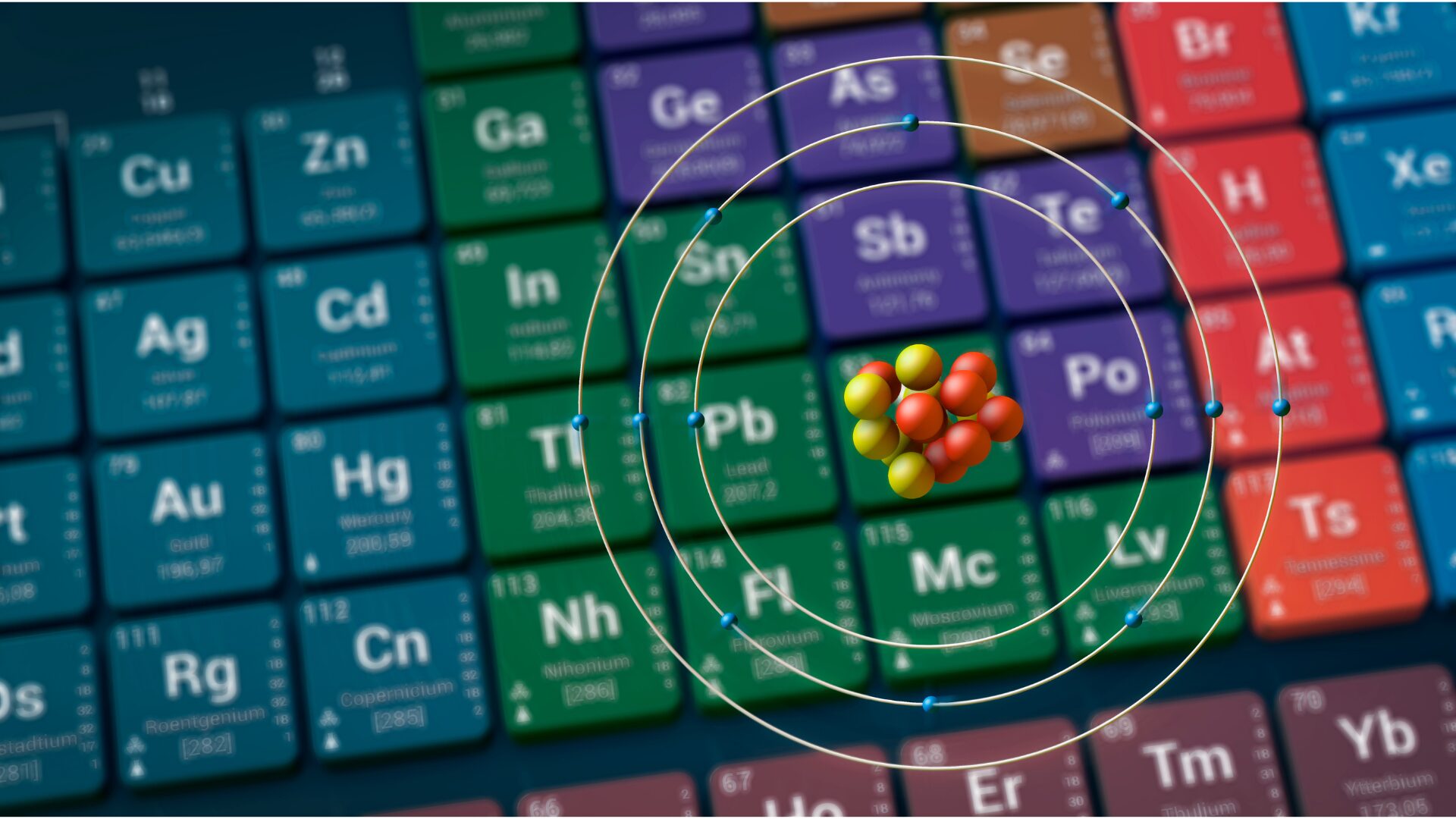
Atomic model over the periodic table representing essential trace elements in human nutrition

The previous article in this series set out Joseph’s Law: for every essential nutrient, a narrow range of intake separates deficiency from toxicity, with function deteriorating on both sides.

Vitamins illustrate that law clearly. Trace elements illustrate it more dramatically, because the working range for several of them is measured in single-digit milligrams or even micrograms per day — a margin so thin that a change in soil chemistry, a well water source, or a single overzealous supplement can move a person from adequate to deficient, or from adequate to toxic, without any change in overall diet quality.

This article covers the trace minerals that carry the greatest disease burden when the body gets them wrong: iron, iodine, zinc, copper, selenium, and manganese, together with the more contested cases of chromium and molybdenum.

The mineral chemistry of natural water — lithium, silica, boron, and vanadium — was addressed in this series’ Water article and is not repeated in full here, though the same principle governs all of it: dissolved or dietary, these elements work only within a range, not above a floor.

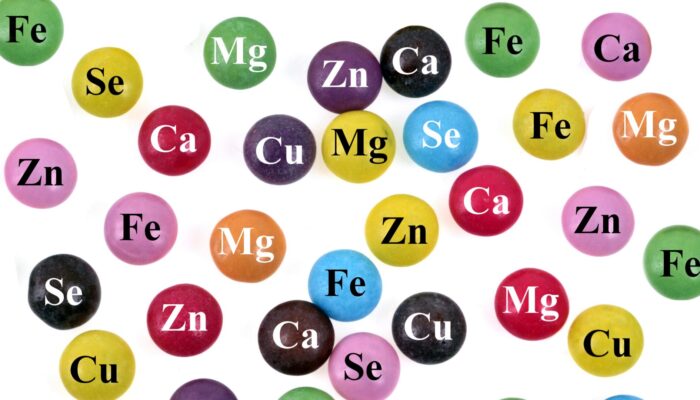
Colorful spheres labeled with mineral symbols including iron, zinc, selenium, copper, magnesium, and calcium

Part I: What Counts as a Trace Element

A trace element is, by convention, one the body requires in quantities below roughly 100 mg per day — a threshold that separates it from the macrominerals (calcium, magnesium, potassium, sodium, phosphorus) needed in gram quantities. Nine trace elements currently have a government-established Recommended Dietary Allowance, Adequate Intake, or accepted essential role: iron, zinc, copper, iodine, selenium, manganese, molybdenum, chromium, and fluoride. Others — boron, vanadium, silicon, nickel — are biologically active but lack a formally established human requirement.

Adult recommended intake, upper limits, and primary roles of selected mineral elements
Element RDA / AI
(adult)
Upper limit
(UL)
Primary role
Iron 8 mg (men); 18 mg (premenopausal women) 45 mg/day Oxygen transport (haemoglobin, myoglobin); electron transport
Zinc 11 mg (men); 8 mg (women) 40 mg/day Cofactor for >300 enzymes; immune function; wound healing
Copper 900 mcg 10,000 mcg (10 mg) Iron mobilisation; connective tissue cross-linking; antioxidant enzymes
Iodine 150 mcg (220 mcg pregnancy) 1,100 mcg/day Substrate for thyroid hormone synthesis
Selenium 55 mcg 400 mcg/day Antioxidant selenoenzymes; thyroid hormone activation
Manganese 1.8 mg (women); 2.3 mg (men) — AI 11 mg/day Bone formation; amino acid, cholesterol, and carbohydrate metabolism
Molybdenum 45 mcg 2,000 mcg (2 mg) Cofactor for sulfite oxidase and xanthine oxidase
Chromium No RDA established; typical intake 20–35 mcg None established Proposed role in insulin signalling — essentiality now disputed

Part II: The Double-Edged Elements

For six of these minerals, deficiency and excess are not abstract bookends — both are documented clinical diseases, sometimes with near-identical presentations.

Iodine: The Clearest Demonstration of the U-Shaped Curve

Iodine is the substrate the thyroid gland uses to build thyroxine (T4) and triiodothyronine (T3). Too little, and the thyroid enlarges in a futile attempt to trap more of it — the classic goitre — while severe deficiency in pregnancy causes irreversible harm to fetal brain development. This is well known. What is less appreciated is that too much iodine produces the same swollen thyroid gland by an entirely different mechanism.

A sudden surge of circulating iodide transiently blocks the thyroid’s own hormone production — the Wolff–Chaikoff effect, an autoregulatory safety brake that most people escape from within days. In a thyroid gland already compromised by autoimmune disease, that escape can fail, producing sustained hypothyroidism from excess iodine. The mirror-image failure — iodine-induced hyperthyroidism, or Jod-Basedow syndrome — occurs when a previously iodine-deficient thyroid is suddenly exposed to a large iodine load, most often from radiographic contrast dye or an enthusiastic kelp supplement, and responds by overproducing hormone.

Deficiency and excess of iodine can produce the same goitre. The thyroid does not care which direction you erred in — only that you left the working range.

Selenium: Deficiency by Geography, Toxicity by Enthusiasm

Selenium content in food tracks the selenium content of the soil it was grown in, which varies enormously by region. Parts of China with severely selenium-poor soil historically saw Keshan disease, a form of cardiomyopathy specific to selenium deficiency, largely eliminated by supplementation programmes.

At the other extreme, selenosis — hair and nail loss, a garlic odour on the breath, a metallic taste, and in severe cases neurological symptoms — has occurred in the same region when soil selenium ran unusually high, and is reported in the modern era chiefly from selenium supplement manufacturing errors that produced massively overdosed capsules.

Manganese: Deficiency Is Essentially Theoretical; Toxicity Is Occupational and Hepatic

Dietary manganese deficiency has never been convincingly demonstrated in a healthy person eating an ordinary diet. Excess is the more realistic concern, particularly in people with chronic liver disease — the liver is the principal route of manganese elimination via bile, so impaired liver function allows manganese to accumulate in the basal ganglia, producing manganism, a syndrome of tremor and Parkinsonian movement changes historically described in miners and welders exposed to manganese dust, and now also recognised in patients on long-term intravenous nutrition without appropriate manganese dose adjustment.

Double Edged - Dr. Bomi Joseph

Iron: Deficiency Is Common; Overload Is Silent and Genetic

Iron deficiency remains, by a wide margin, the most common nutritional deficiency on Earth, concentrated in young children, menstruating women, and pregnancy. At the opposite pole sits hereditary haemochromatosis, a genetic disorder — carried by a meaningful fraction of people of Northern European descent — in which the body absorbs iron without restraint, depositing it in the liver, heart, and pancreas over decades until it produces cirrhosis, cardiomyopathy, and diabetes. Vitamin C, which enhances iron absorption, is specifically discouraged as a co-supplement in this population for exactly this reason.

The practical implication is that iron is one of the worst possible minerals to supplement reflexively. A person with unrecognised haemochromatosis who takes an iron supplement ‘for energy’ is actively accelerating organ damage that may not declare itself for twenty years. A ferritin and transferrin saturation test, not a guess, is the correct starting point.

Zinc and Copper: An Antagonistic Pair

Zinc and copper share an absorption pathway in the small intestine, and they compete for it. Sustained zinc intake at 50 mg per day or more — a dose easily reached by stacking a multivitamin with a standalone zinc lozenge regimen, or by chronic use of zinc-containing denture adhesive, a genuine and repeatedly documented cause — induces a functional copper deficiency. The resulting syndrome includes anaemia, low white cell counts, and, in its more advanced form, a progressive myeloneuropathy affecting gait and coordination that can take six months of copper repletion to begin reversing.

The lesson generalises beyond this specific pair: trace elements are frequently linked through shared transport proteins, and correcting one in isolation, at a high dose, can quietly starve another.

Part III: The Contested Cases

Chromium’s status as an essential nutrient has been quietly downgraded since it was first proposed. The Food and Nutrition Board classified it as essential in 2001 on the basis of its proposed role in insulin signalling; more recent review has not been able to demonstrate a reversible human deficiency syndrome under controlled conditions, and no Tolerable Upper Intake Level has been set because no consistent toxicity has been identified at typical doses either. Chromium picolinate remains heavily marketed for blood sugar control on the strength of a hypothesis the underlying human deficiency data have not firmly supported.

Author’s note:

Not every mineral on a supplement label deserves equal concern.

Some fail by genuine excess.

Others have never been shown to fail at all.

Molybdenum sits at the opposite end of certainty: it is unambiguously essential, as the cofactor for four specific enzymes, most notably sulfite oxidase and xanthine oxidase. Deficiency from diet alone has essentially never been reported in a healthy person — food sources are abundant relative to requirement — and toxicity is similarly rare outside occupational exposure. It is essential in the textbook sense and irrelevant in the practical sense: almost no one needs to think about it.

Two martial artists facing each other, representing scientific debate over contested trace elements
Withered potted plant symbolizing the neglected role of trace elements in health

Part IV: Why Trace Elements Are the Neglected Chapter

Vitamins receive public attention because their deficiency diseases have memorable names and historical drama — scurvy on sailing ships, rickets in industrial cities. Trace element deficiencies and toxicities are quieter and more geographically patchy: they depend on local soil chemistry, water source, and food processing in a way that a national RDA, calculated as a population average, cannot capture for any single individual. A person farming selenium-poor soil and a person farming selenium-rich soil are eating diets that look identical on a nutrition label and are, in trace element terms, entirely different diets.

Modern food processing compounds the problem in both directions. Refining strips trace minerals from grain along with fibre — most of the zinc, manganese, and chromium in wheat is removed with the bran and germ during milling — while fortification and supplementation add some of them back in forms and doses that were never calibrated to any individual’s baseline status.

Part V: Don't Guess. Measure — Again.

The governing principle from the previous article applies without modification here.

Ferritin identifies iron deficiency and, indirectly through pattern, hints at overload.

TSH plus a spot urinary iodine estimate clarifies iodine status.

Serum zinc alongside serum copper and ceruloplasmin clarifies the antagonistic pair.

None of these tests are exotic, and all of them are more informative than assuming a multivitamin has already solved the problem, or that a trace mineral is too small in quantity to be worth worrying about.

Tape measure stretched across wood representing the need to reassess nutritional measurements and standards

Part VI: Practical Principles for Trace Element Intelligence

One Logo - Dr. Bomi Joseph

Treat As Dose

Treat ‘trace’ as a description of dose, not of consequence. A milligram-scale error in iodine, iron, or zinc intake produces disease exactly as reliably as a gram-scale error in a macronutrient.

Two Logo - Dr. Bomi Joseph

Test First

Test before correcting. Ferritin, TSH, zinc, and copper are inexpensive and specific — guessing is not a substitute for any of them.

Three Logo - Dr. Bomi Joseph

Respect Competition

Respect antagonistic pairs. Do not supplement zinc or iron in isolation, at high dose, for months, without periodically checking the mineral it competes with.

Four Logo - Dr. Bomi Joseph

Know Your Geography

Know your geography. Soil-dependent minerals — selenium and iodine especially — mean that dietary adequacy is regional, not universal; a diet that is sufficient in one part of the world can be deficient in another.

Five Logo - Dr. Bomi Joseph

Do Not Assume

Do not assume liver or kidney disease changes nothing about mineral dosing. Impaired manganese and copper elimination, in particular, can turn an ordinary supplement dose into a toxic one.

Six Logo - Dr. Bomi Joseph

Differentiate

Reserve genuine concern for the elements with a demonstrated human toxicity and deficiency syndrome, and hold looser convictions about the ones — chromium among them — where the evidence for either extreme remains thin.

The macronutrients build the body. The trace elements, in quantities smaller than a grain of salt, decide whether it runs correctly — and, like every essential nutrient, they punish too little and too much in equal measure.

Ask DrBomi® AI About Health

Educational guidance only. Not medical advice. 0 / 240