The Treatment Paradox: Why the “Solution” to Obesity Still Requires the Discipline We Abandoned

In my earlier article, I explained why the body adapts to chronic GLP-1 signaling and why weight often returns when treatment stops. This article addresses a different question: why does every obesity shortcut eventually lead medicine back to discipline, nutrition and exercise?

I call this the “Treatment Paradox.”

Watch: The Treatment Paradox

Watch my three-minute commentary on why weight loss must never be confused with health restoration—and why obesity treatment repeatedly returns to nutrition, strength and discipline.

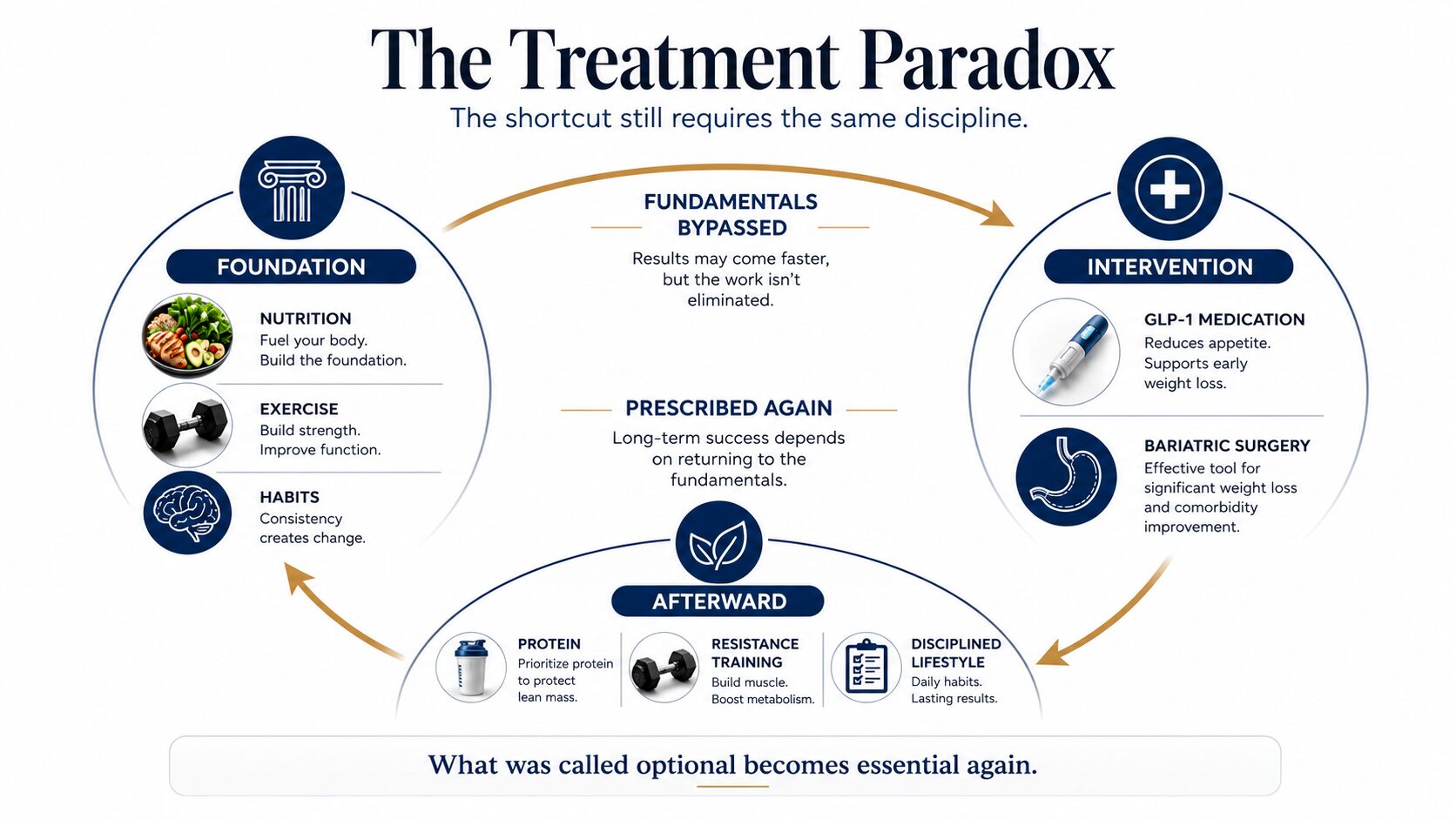
Treatment Paradox Infographic showing nutrition, exercise and habits as the foundation of health, followed by GLP-1 medication or bariatric surgery, and a return to protein, resistance training and disciplined lifestyle.
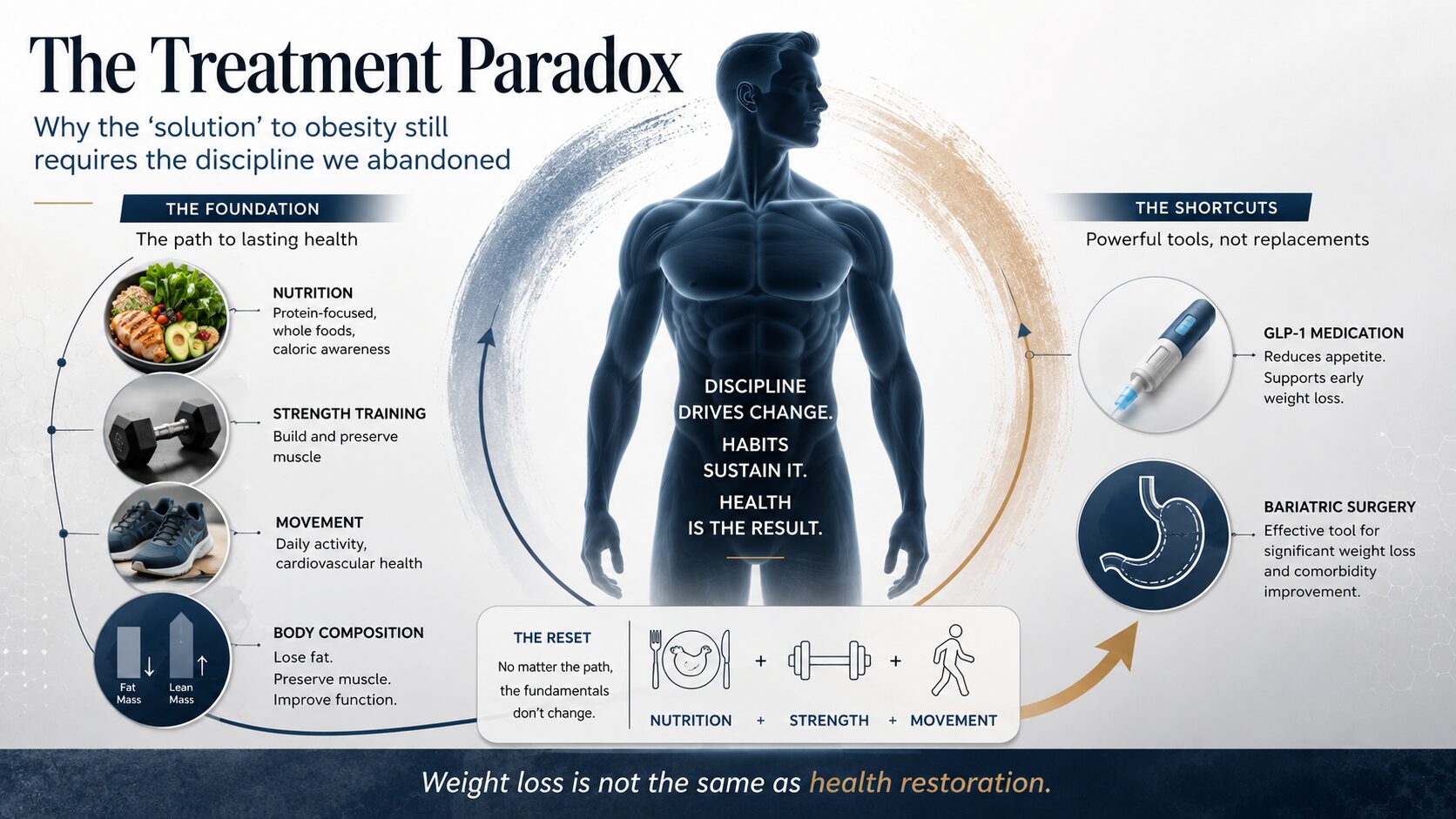
Infographic showing nutrition, strength training and movement as the foundations of health, while GLP-1 medication and bariatric surgery still require those same habits.

After Changes Upon Changes, It's More Or Less The Same

In 1996, I started the Obesity Center at UCSF.

Our approach was not glamorous. It was not surgical. It was not pharmacological. It was based on the fundamentals of human health: disciplined eating, proper nutrition, exercise, behavioral consistency and careful tracking of body composition.

We were not merely watching the scale. We tracked what mattered: loss of body fat and preservation, or gain, of functional muscle.

Then the economics of obesity care changed.

A behavioral and metabolic program that required time, discipline and patient accountability could not compete financially with a surgical model. The Center moved toward bariatric surgery.

But what struck me then still strikes me now: after surgery, patients were prescribed the same essential behaviors we had been teaching before surgery. The Treatment Paradox-

Eat correctly.
Consume adequate protein.
Exercise.
Build strength.
Develop discipline.
Change your habits permanently.

That raises an uncomfortable question:

If those behaviors are essential after the intervention, why were they considered insufficient before the intervention was used?

This is not an argument that bariatric surgery has no legitimate role. Severe obesity can become medically dangerous, and selected patients may require aggressive intervention. The issue is not whether surgery can produce weight loss. It can.

The issue is the recurring medical pattern: we stop treating discipline as the foundation, substitute a more powerful intervention, and then quietly reintroduce discipline as soon as the intervention creates its own vulnerabilities.

Today, the same treatment paradox is appearing again with GLP-1-based weight-loss drugs.

The GLP-1 Promise

Medications such as semaglutide and tirzepatide can produce substantial weight loss. Appetite declines. Food intake falls. Blood glucose may improve. The scale can move rapidly.

For a person who has struggled for years, this can feel like liberation.

But weight loss is not the same as health restoration.

A body can become lighter while also becoming weaker.

In clinical body-composition studies, GLP-1-based weight loss has included meaningful loss of lean mass. In the STEP 1 body-composition substudy, participants receiving semaglutide lost substantial fat mass, but total lean mass also declined. In the SURMOUNT-1 substudy of tirzepatide, approximately one quarter of the weight lost was lean mass.

Lean mass is not identical to skeletal muscle, and the exact degree of muscle loss varies among individuals. But clinically, the concern is obvious: when a therapy produces rapid weight loss through appetite suppression, the body is at risk of losing not only stored fat, but also tissue required for strength, metabolic resilience, mobility and long-term function.

This is particularly concerning in older adults, in sedentary individuals and in anyone who already has diminished muscle reserve.

GLP-1 drugs and the shortcut fallacy explained by Dr. Bomi Joseph
Treatment Paradox Infographic showing nutrition, exercise and habits as the foundation of health, followed by GLP-1 medication or bariatric surgery, and a return to protein, resistance training and disciplined lifestyle.
Interventions may change the speed or mechanism of weight loss. They do not abolish the biological need for proper nutrition, muscle-preserving exercise and disciplined behavior. This is the "Treatment Paradox."

Now listen carefully to the advice being given to people taking GLP-1 drugs

The Prescription After the Prescription

  • Eat more protein.
  • Perform resistance exercise.
  • Preserve muscle.
  • Do not rely only on the medication.
  • Develop healthy habits.
  • Stay consistent.

In other words, once again, the “solution” requires the same disciplines that were pushed aside when the shortcut became commercially and culturally attractive.

We tell patients that disciplined nutrition and exercise are too difficult, too slow or too unreliable. Then, after surgery or medication, we tell them that disciplined nutrition and exercise are absolutely essential if they want a good outcome.

But there is an additional problem with the GLP-1 era.

Consumption of protein is not a magic antidote to muscle loss.

The Body Does Not Measure Success by the Scale

Medicine has become overly impressed with kilograms lost.

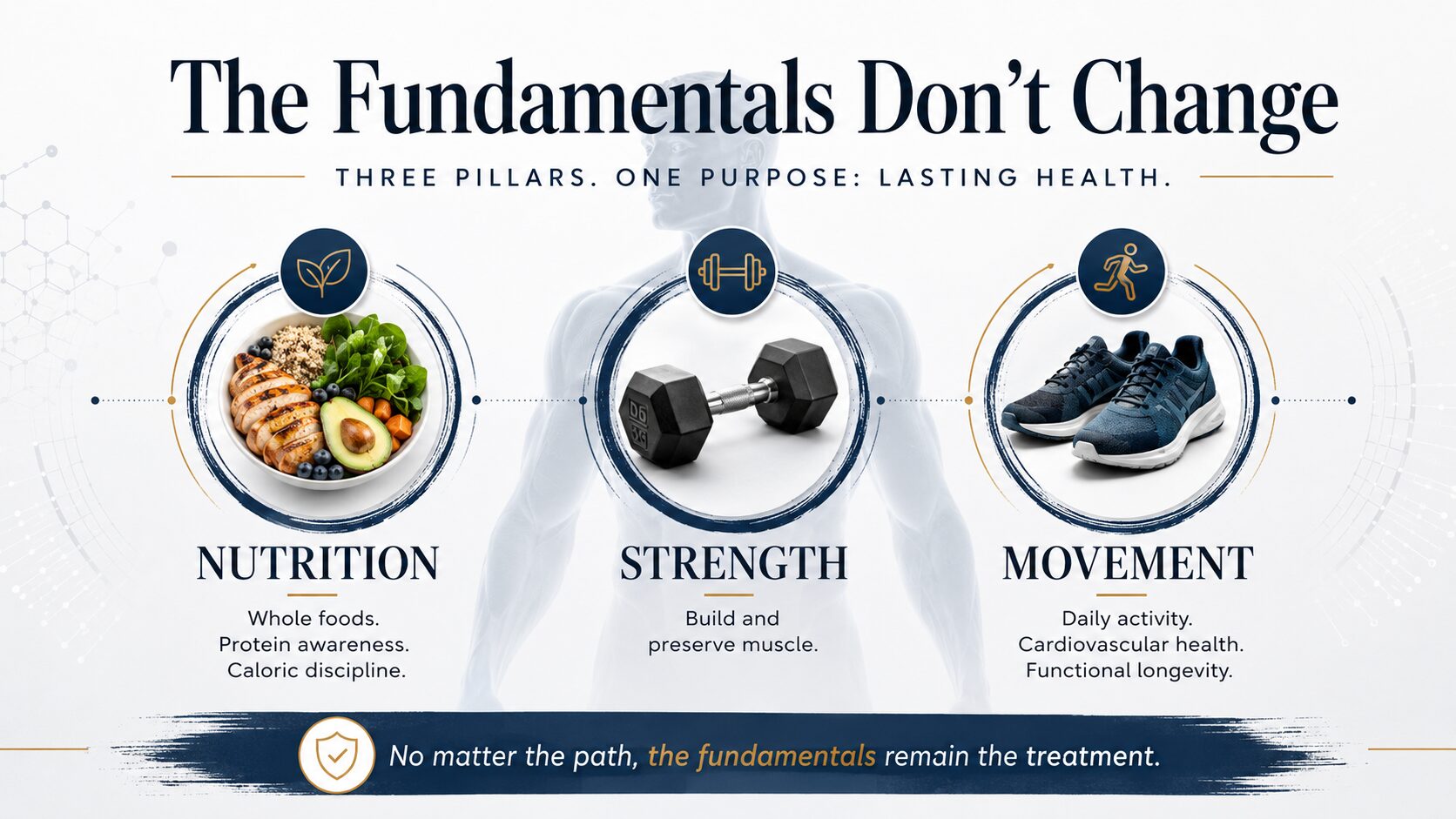
Fundamentals Dont Change - Dr. Bomi Joseph
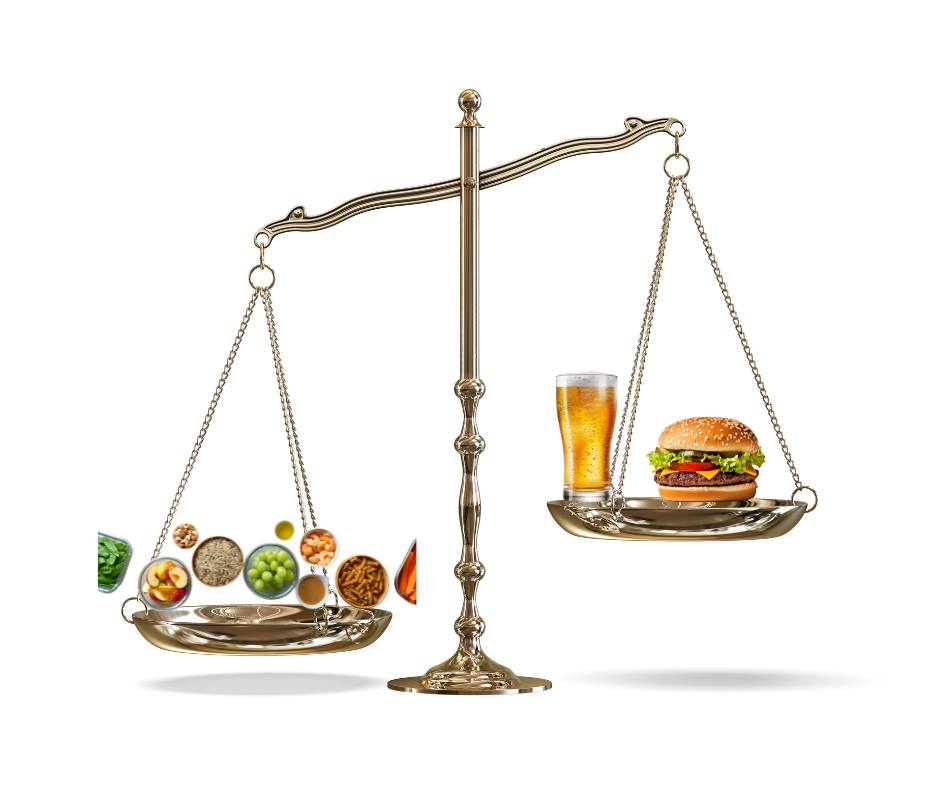
A balanced scale comparing whole foods on one side and beer with a burger on the other, showing the imbalance caused by modern diets.

The body does not live on a bathroom scale.

The body lives through muscle strength, balance, insulin sensitivity, bone loading, mitochondrial competence, mobility, immune function and the ability to remain independent with age.

model homebanner - Dr. Bomi Joseph

Health is not about how you "look."

A patient who loses significant weight but also loses strength may appear improved in a photograph while becoming biologically more fragile. That is not a trivial side effect. It is a warning.

Icon of muscles measured by Deep Health Device

Involuntary muscles are critical for health

Muscle is one of the body’s most important metabolic organs. It helps regulate glucose disposal, protects mobility, supports bone health and provides reserve during illness and aging. Losing muscle in exchange for a lower number on the scale can become an especially dangerous bargain later in life.

Discipline Was Never the Enemy

Group of martial artists, representing discipline, practicing meditation and focus outdoors, dressed in traditional gis.

The current culture increasingly describes discipline as though it were cruel, outdated or unrealistic.

It is none of those things.

Discipline is not punishment.
Discipline is not deprivation.
Discipline is the daily act of protecting the body before crisis forces us to act.

A patient who learns to eat properly, train muscle, restore metabolic function and understand the signals of his or her own body is not merely losing weight. That patient is gaining capacity.

That was the philosophy behind the Obesity Center we built in 1996. It remains the correct philosophy today.

This does not mean that every person can avoid every medication or procedure. Nor does it mean that patients should be shamed for using available medical therapies. There are appropriate uses for both bariatric surgery and GLP-1 medications.

But no intervention should be presented as a replacement for the foundations of health.

If a drug requires discipline, protein management and resistance training to prevent an unhealthy loss of lean tissue, then discipline was never obsolete.

If surgery requires permanent nutrition control and exercise afterward, then those behaviors were never secondary.

They were always the treatment.

The Question Medicine Should Be Asking

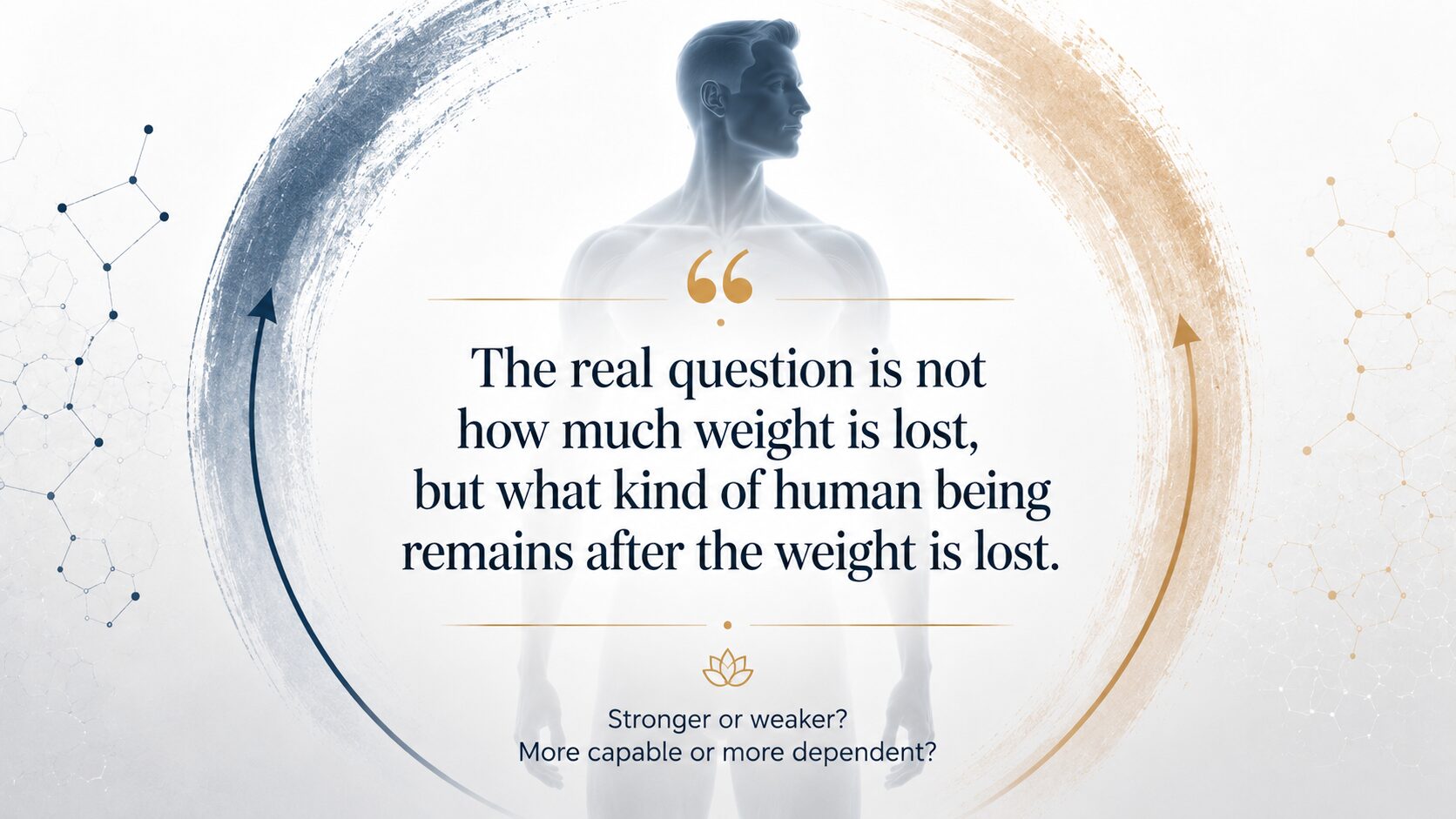
What kind of human being remains after the weight is lost?

Dr. Bomi Joseph standing relaxed and smiling in his London office.
The proper question is not:

“How much weight can we make a patient lose?”

The proper question is:

“What kind of human being remains after the weight is lost?”

Stronger or weaker?
More capable or more dependent?
Metabolically restored or merely pharmacologically managed?
Prepared for aging or made more vulnerable by it?

Obesity treatment must return to that standard.

The objective is not merely a lighter body.

The objective is a healthier, stronger, more disciplined and more resilient human being.

Because the real measure of health is not how quickly weight disappears.

It is what remains when the shortcut is over.

References

  1. Wilding JPH, et al. Impact of Semaglutide on Body Composition in Adults With Overweight or Obesity: Exploratory Analysis of the STEP 1 Study. Journal of the Endocrine Society. 2021.
  2. Look M, et al. Body composition changes during weight reduction with tirzepatide in the SURMOUNT-1 study. Diabetes, Obesity and Metabolism. 2025.
  3. Mechanick JI, et al. Clinical Practice Guidelines for the Perioperative Nutrition, Metabolic, and Nonsurgical Support of Patients Undergoing Bariatric Procedures — 2019 Update. Endocrine Practice.
  4. Wilding JPH, et al. Weight regain and cardiometabolic effects after withdrawal of semaglutide: The STEP 1 trial extension. Diabetes, Obesity and Metabolism. 2022.
Educational guidance only. Not medical advice. 0 / 240