Human physiology is not a one-sensor system.
Health is not determined by a single heartbeat, electrical signal, blood-flow measure, tissue measurement, or laboratory value.
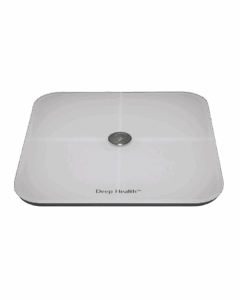
For that reason, the Deep Health® Device was designed as a multimodal physiological measurement system.
It acquires several physically distinct types of biological signals from the same person under a standardized measurement condition.
These include electrical, optical, mechanical, acoustic, ultrasonic, and bioelectrical-impedance signals.
The Device then follows a measurement hierarchy:
Physical sensor signals
→ Signal processing and artifact control
→ Validated physiological features
→ Physiological variables
→ Adaptive-stage correlates
→ Adaptive biological efficiency
→ DHU-D
This hierarchy protects an important scientific principle.
A sensor directly measures a physical signal.
A physiological feature may then be derived from that signal.
A higher-order biological characteristic must be estimated from those measurements after the relationship has been validated.
For example:
An optical detector can directly measure changes in received light intensity.
Those changes can be used to derive information about pulsatile tissue blood-volume behavior.
That physiological information may then contribute to an estimate of biological delivery efficiency.
These are three different levels of scientific claim.
Deep Health® keeps them separate.
No single sensor defines health.
The purpose of combining several modalities is to determine whether adaptive biological efficiency is expressed consistently across multiple interacting physiological systems.