
The Quantified Human Who Forgot How to Feel
We are measuring ourselves more than at any time in human history. We know ourselves less.
Every morning, millions of people wake up and, before asking how they feel, look at a screen.
How did I sleep?
The answer apparently no longer comes from the person who actually slept. It comes from a device: sleep score 74; deep sleep 1 hour 17 minutes; REM below average; resting heart rate elevated; recovery poor. Therefore, apparently, you did not sleep well.
You just spent eight hours inside your own body. Yet a machine worn on your finger or wrist is being asked to tell you what happened to you. Increasingly, people believe the machine over themselves.
We have confused measuring the body with knowing the body.
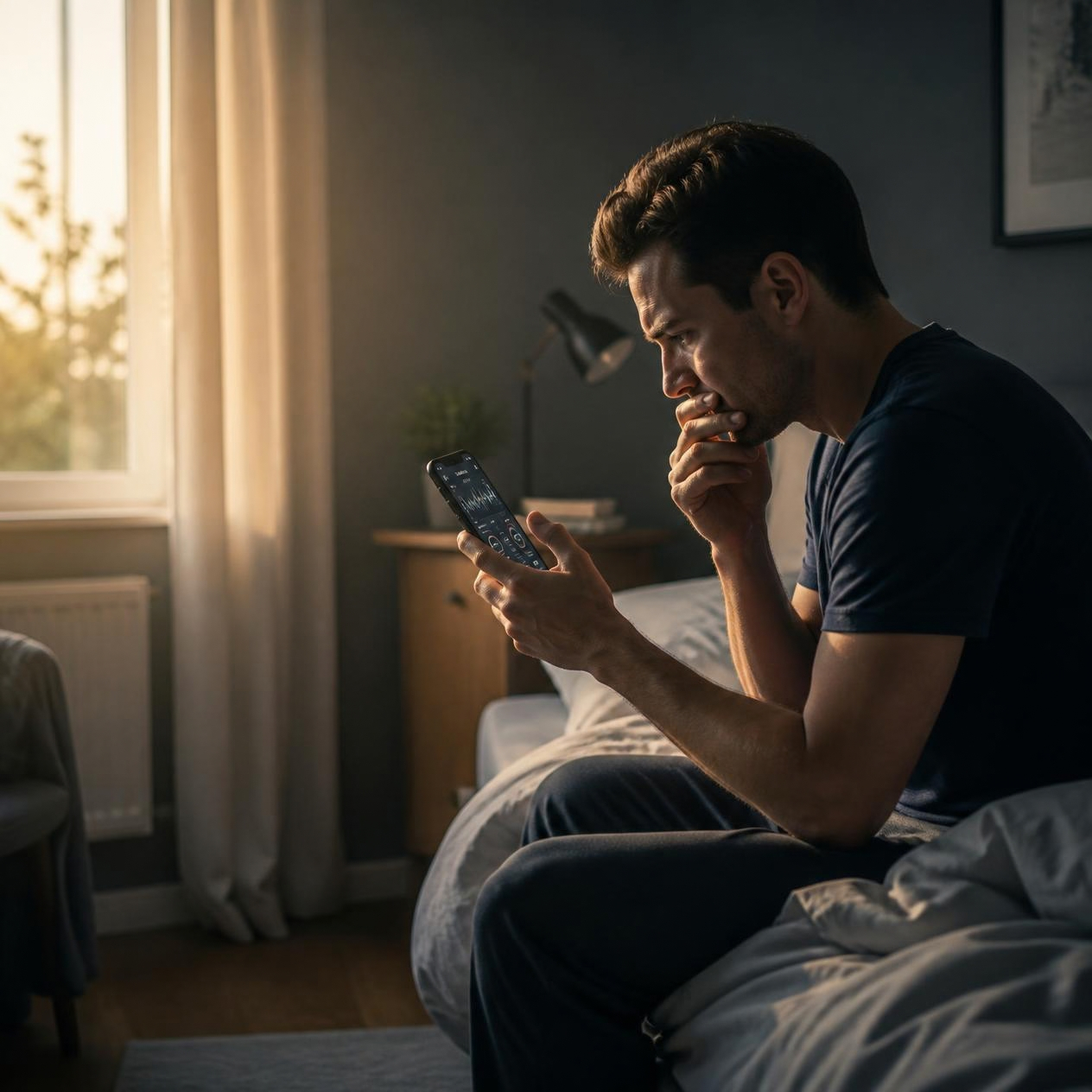
You slept for eight hours. Why does a machine get to tell you how you slept?
“My Wearable Says I Slept Well. Why Am I Tired?”
I see variations of this question constantly: “My device says I got plenty of deep sleep, but I woke up exhausted.” Or the reverse: “My sleep score was terrible last night, but I feel great.”
The measurement and the human experience disagree. Instead of questioning the measurement, people increasingly question themselves. That is the part that concerns me.
A wearable is not inside your brain watching you sleep. It measures a limited collection of peripheral signals and uses algorithms to infer sleep stages. The result is an estimate. Psychologically, the estimate can become a verdict.
You no longer wake up and experience your morning. You wake up and check your grade.
The Measurement Becomes Part of the Experiment
Imagine going to bed thinking: I hope I get enough deep sleep. What will my HRV be? Why am I still awake?
The device that was supposed to help you understand your sleep has become something you think about while trying to sleep. Sleep requires surrender. You cannot command yourself into deep sleep. Yet we have introduced another objective: perform well for the sleep tracker.
Tomorrow morning comes the examination result. An 82 offers reassurance; a 61 creates worry. Human behavior begins serving the technology.
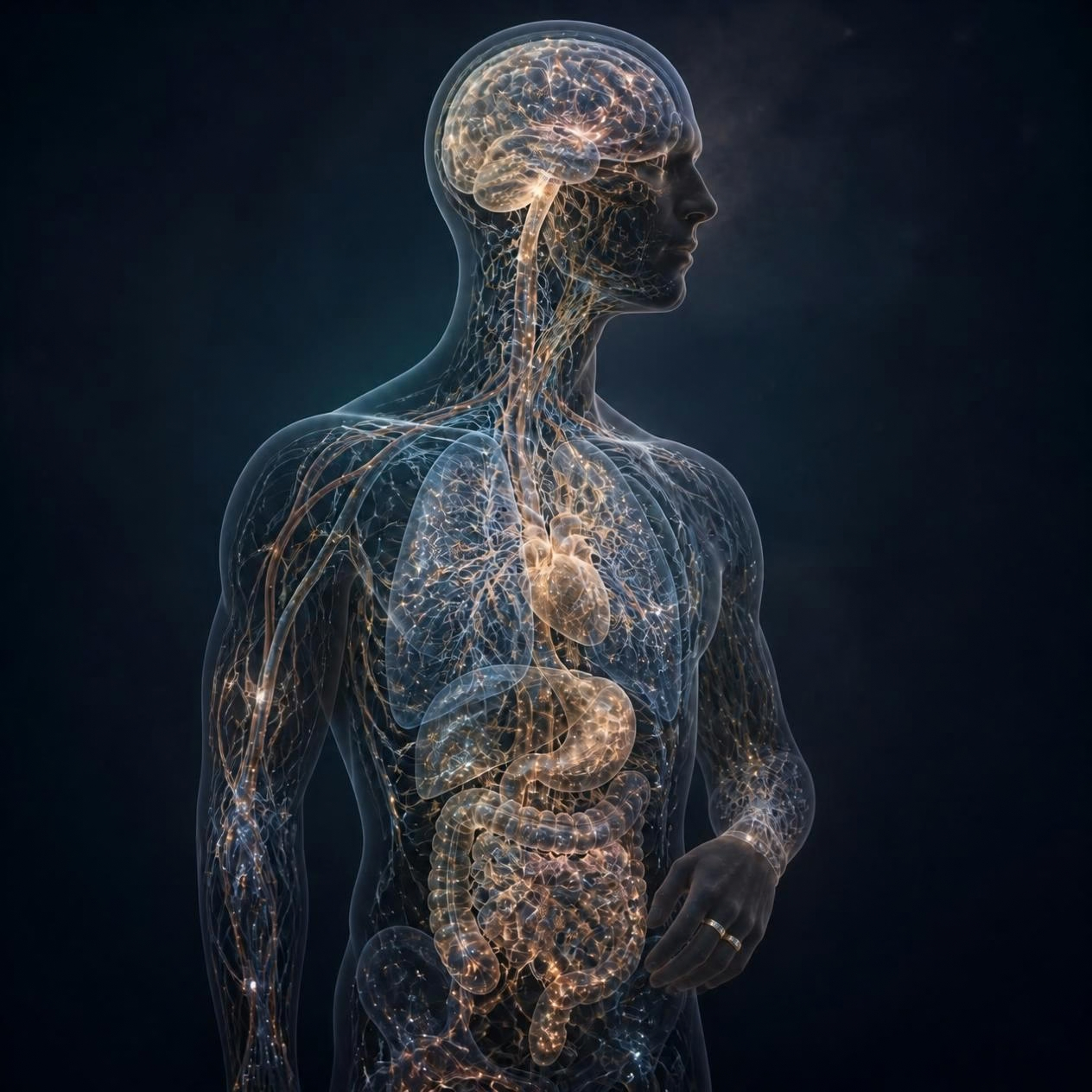
The human body contains an extraordinary interconnected sensor and regulatory network.
Your Body Already Contains an Extraordinary Sensor Network
Your body detects changes in oxygen, carbon dioxide, glucose, temperature, pressure, hormones, nutrients, metabolites and countless other internal conditions. These signals interact through feedback loops, compensations and regulatory pathways.
The body is not a spreadsheet. It is an interconnected adaptive system. Our work on metabolic sensors describes signal reception, transduction and response, along with sensitivity, specificity, adaptability and redundancy. These pathways cross-talk and change as conditions change.
Your body has been doing this long before anyone put a photodiode on your wrist.
Data Is Not Awareness
Data is information about you. Awareness is information from within you.
A device may report your heart rate, movement or HRV. It cannot experience your calmness, the restoration you feel on waking, or whether your mind is peaceful. It may produce millions of data points. None of those data points is you.
We are building increasingly sophisticated instruments for observing ourselves while allowing our internal ability to observe ourselves to atrophy.
The Mind Must Be Trained Too
I have always viewed the body as a temple. A strong body provides the infrastructure for a strong mind, but mental strength must be cultivated. A strong mind is peaceful, calm and difficult to perturb.
This is why I have practiced breath control, meditation, martial arts and physical conditioning. Breath offers a bridge between conscious intention and physiology. Sit quietly. Slow it. Observe it. Let the noise of the external world fade. Become aware of yourself again.
No Bluetooth connection required.
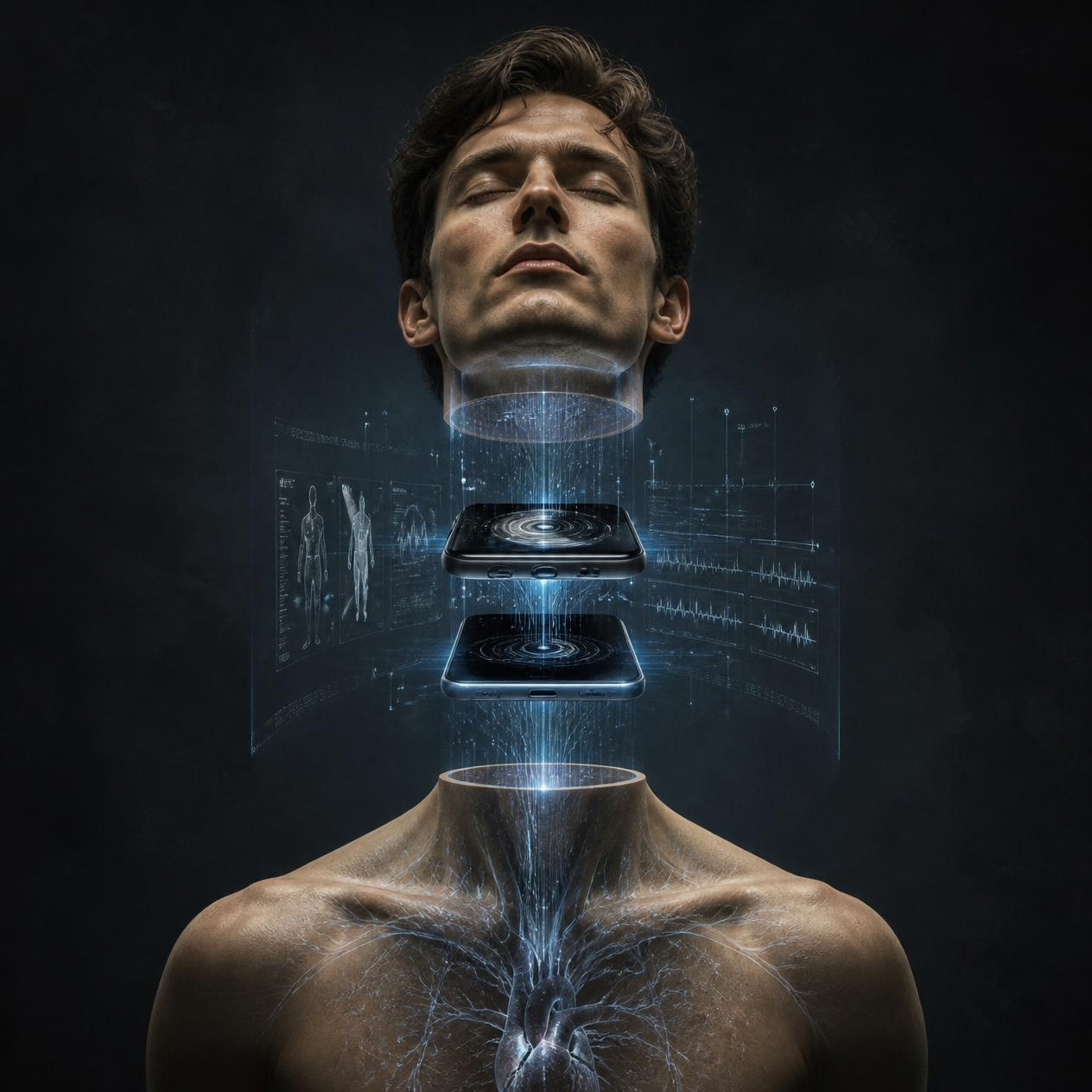
We have inserted technology between the body and the mind that inhabits it.
We Are Training People to Distrust Their Own Bodies
A person wakes refreshed. The device says “Poor recovery.” Suddenly that person doubts whether to exercise. Another wakes tired. The device says “Optimal sleep.” Now the person doubts the fatigue.
In both cases, a machine has introduced doubt between mind and body. Repeat this thousands of times across sleep, readiness, stress, recovery, biological age, glucose, scans, blood panels and every other score. At some point we must ask: What are we trying to find? What have we stopped noticing while looking for it?
More Measurement Does Not Necessarily Produce More Health
Medicine requires measurement. Science requires measurement. I have spent much of my professional life measuring human physiology. A measurement should answer a meaningful question, identify a problem, guide an intervention, or show whether it worked.
A wearable, scan or laboratory panel may produce information. Information itself is not health. Collecting more of it does not automatically make a person healthier. Sometimes it gives the mind more to worry about.
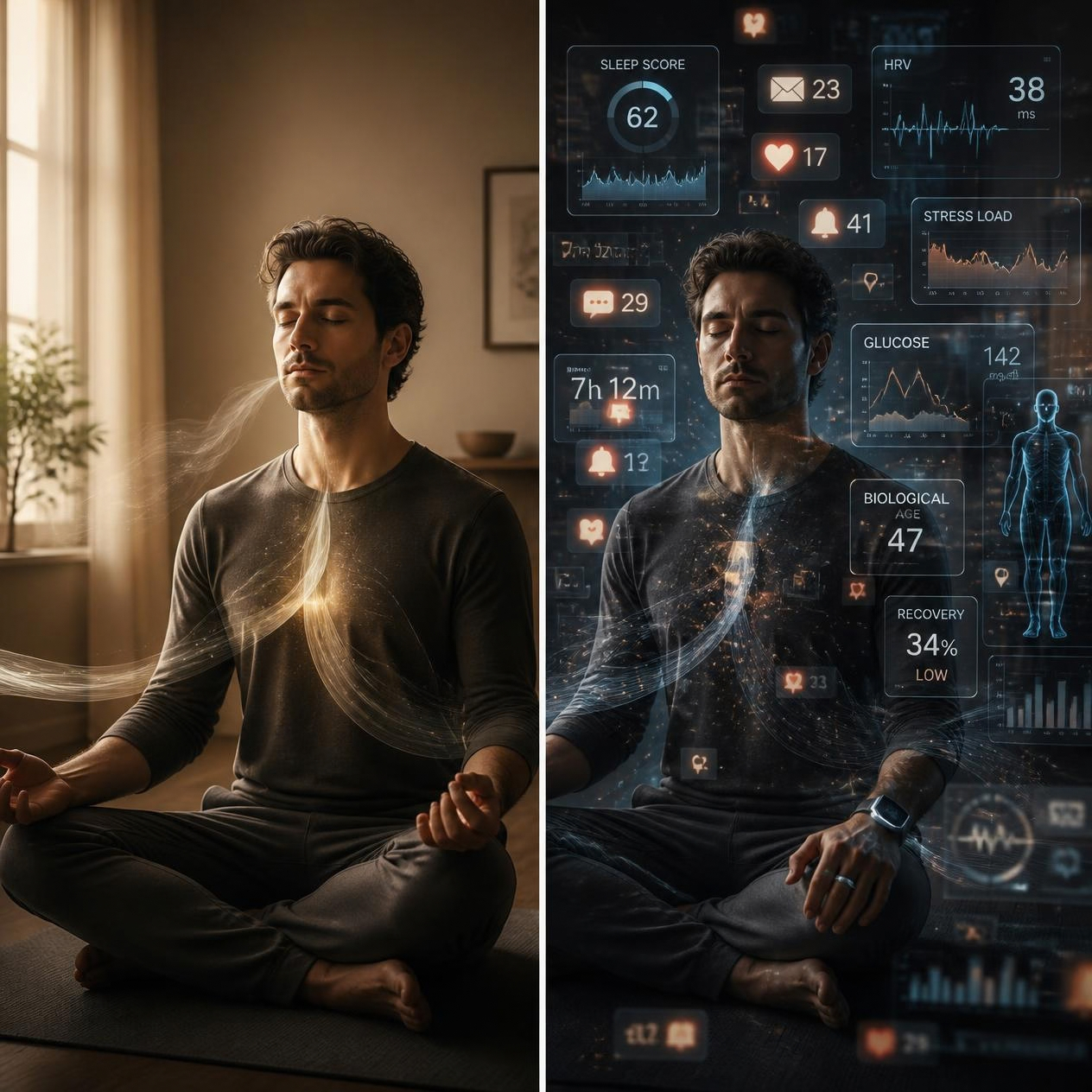
Awareness asks how I feel. Surveillance asks what the number says.
From Self-Awareness to Self-Surveillance
Human beings once listened to their bodies. Now increasingly we monitor them. Awareness is quiet. Surveillance is vigilant. Awareness asks, “How do I feel?” Surveillance asks, “What does the number say?”
Awareness develops confidence. Surveillance can create dependence. That dependence can weaken one of the most important relationships we possess: the relationship between the mind and the body it inhabits.
And Then There Is the Soul
People make the soul unnecessarily mystical. I do not. To me, the soul is the presence you create through your body, mind, breath, thoughts and actions. It is what others experience when they encounter you and remember after you leave.
There is no Soul Score. No dashboard for courage. No sensor for dignity. No algorithm for serenity. No biomarker for wisdom. Those qualities must be cultivated.
The Powerful Human Being
A powerful human being knows himself: a strong body, a disciplined mind, a controlled breath, a peaceful internal state and an awareness of his own physiology.
He can experience discomfort without immediately panicking; distinguish fatigue from laziness, pain from fear, stress from danger, hunger from habit and noise from meaning. These abilities require practice. They cannot be downloaded.

You cannot outsource your health.
Put the Human Being First
Use measurement when it has a purpose and data when it leads to meaningful action. Do not confuse more numbers with greater self-knowledge. Never allow an algorithm to become the final authority on how you feel.
Tonight, turn everything off. Sit quietly. Breathe. Let the mind become still. Go to sleep. Tomorrow morning, before reaching for a screen, ask yourself: How do I feel? Listen carefully.
Your body is yours. Your mind is yours to train. Your breath is yours to control. Your presence in this world is yours to create.
Do not allow the age of measurement to make you a stranger inside your own body.
You cannot outsource your health. It lies within you.