
How Hemp Became Cannabis
A First-Hand Account of the Birth of the CBD Industry
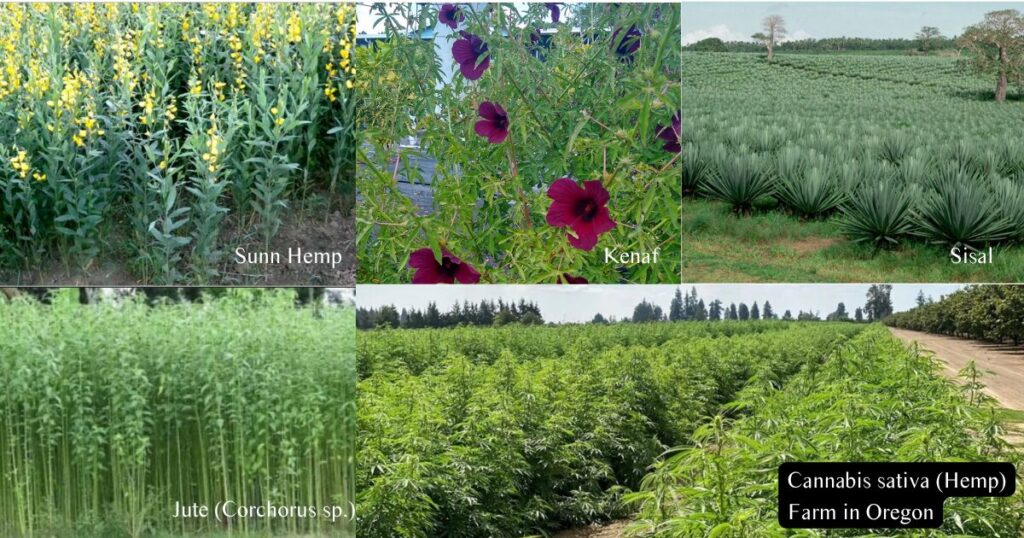
When Did Hemp Stop Meaning Hemp?
Today, when most Americans hear the word hemp, they think of Cannabis sativa.
When I hear the word hemp, I think of ropes, gunny sacks, cordage, paper, and textiles.
I think of Sunn Hemp, Jute, Kenaf, Abaca, and Sisal.
That difference in understanding is not accidental. How hemp became cannabis is the result of one of the most remarkable agricultural redefinitions in modern history.
What Hemp Originally Meant
For centuries, hemp was primarily a fiber crop.
Across India and much of Asia, hemp referred to plants grown for industrial fiber used in ropes, sacks, twine, cordage, paper, and textiles.
Among the most important were:
- Sunn Hemp — Crotalaria juncea
- Jute — Corchorus spp.
- Kenaf — Hibiscus cannabinus
- Manila Hemp — Abaca
- Sisal
These plants were valued because they produced strong fibers. They were not cultivated for cannabinoids. They contained no meaningful CBD. They contained no THC.
And nobody in India used cannabis plants to manufacture jute sacks or rope. Cannabis had its own identity. In India it was commonly known as Bhang.
The distinction between fiber crops and cannabinoid-producing plants was obvious.
The Hemp Industry Before Prohibition
Many Americans are unaware that hemp was once a legitimate agricultural crop in the United States.
Farmers cultivated hemp for rope, sailcloth, paper, cordage, and industrial applications. Hemp was considered an agricultural commodity — not a controlled substance, not a public menace, and not a political issue.
That changed dramatically in the twentieth century.
The 1937 Turning Point
In 1937, the Marihuana Tax Act fundamentally altered the future of hemp cultivation in America.
Although the law did not technically prohibit hemp farming, it imposed regulatory burdens and legal risks that made cultivation increasingly impractical.
For all practical purposes, industrial hemp became entangled with marijuana regulation. The distinction between a fiber crop and a psychoactive drug crop largely disappeared. This is how hemp became cannabis
American hemp production entered a long decline.
During World War II, the U.S. government briefly reversed course and encouraged farmers to grow hemp under the famous Hemp for Victory campaign because fiber was urgently needed for the war effort.
After the war, however, hemp once again fell out of favor.
The final blow came with the Controlled Substances Act of 1970, which effectively treated all Cannabis sativa as a controlled substance regardless of whether it was intended for fiber, seed, or intoxication.
For decades thereafter, hemp farming was essentially absent from the American agricultural landscape.
The Forgotten Meaning of Hemp
While hemp disappeared from American fields, the original hemp crops never disappeared from Asia.
Sunn Hemp continued to be grown. Jute continued to be grown. Kenaf continued to be grown. Abaca and Sisal continued to be grown.
Ropes continued to be made. Cordage continued to be made. Gunny sacks continued to be made.
The traditional hemp economy remained alive. What disappeared was the public understanding of what hemp originally meant.
My Entry Into the CBD Story
My personal involvement began in 2014.
At that time, there was essentially no meaningful commercial CBD hemp industry in the United States.
The CBD market that exists today simply did not exist. There were no nationwide CBD brands. There were no thousands of acres of CBD hemp farms. There was no mainstream hemp-derived cannabinoid economy.
The primary source of CBD known to me at the time was a cannabis variety developed in Israel called Avidekel.
Raphael Mechoulam and Avidekel
In 2014, I funded Professor Raphael Mechoulam to investigate whether plants other than Cannabis sativa could produce cannabidiol — CBD.
My reason was simple. At that time, Avidekel appeared to be the primary significant source of CBD available.
Professor Mechoulam himself had directed me toward Avidekel as an important CBD source.
That raised a question that fascinated me: was Cannabis sativa truly the only meaningful botanical source of CBD, or had other plants simply not been investigated?
That question led directly to my funding and research interest.
How High-CBD Cannabis Spread Across America
Around this period, Israeli genetics began entering the United States.
Avidekel was a cannabis plant. It was bred for low THC and high CBD content.
My understanding at the time was that these genetics were not intended to be freely propagated throughout the American marketplace.
Yet within a remarkably short period, high-CBD cannabis genetics spread widely. One of the most recognized descendants became known as AC/DC.
Suddenly, farmers across America were planting fields of high-CBD cannabis.
What interested me was not merely the agriculture. It was the language.
These cannabis plants were increasingly being marketed as hemp. This is how hemp became cannabis.
The Great Rebranding
How Hemp Became Cannabis
This is where I believe a profound shift occurred.
Historically, hemp referred primarily to fiber crops. Now a cannabinoid-producing cannabis plant was being presented to the public as hemp.
The word itself had changed.
A term historically associated with rope, paper, cordage, sacks, and textiles was now being used to describe a low-THC cannabis crop grown primarily for CBD extraction.
The original hemp economy and the emerging CBD economy were fundamentally different industries.
One produced fiber. The other produced cannabinoids.
Yet both were now being described by the same word.
The Farm Bill
The next major milestone came through federal legislation. This was how hemp became cannabis.
Senator Mitch McConnell became one of the most visible advocates for hemp legalization and played a central role in advancing hemp provisions within the 2018 Farm Bill.
The legislation ultimately defined hemp as Cannabis sativa containing less than 0.3 percent THC.
With that definition, a centuries-old agricultural term became legally attached to a specific cannabis plant.
The transformation was complete and this was how hemp became cannabis.
What Was Lost
What disappeared during this process was historical context.
Many Americans now assume that hemp rope came from cannabis. That hemp paper came from cannabis. That hemp sacks came from cannabis. That hemp fiber has always meant cannabis fiber.
Historically, that is simply not how the term was used across much of the world.
The hemp crops that built the rope and cordage industries of Asia were Sunn Hemp, Jute, Kenaf, Abaca, and Sisal.
Not cannabinoid-producing cannabis plants.
My Conclusion
Having observed the emergence of the CBD industry from within the field, I believe the modern American hemp industry represents one of the most successful agricultural rebrandings in modern history.
The word hemp was not merely revived.
It was redefined.
Today, hemp means Cannabis sativa in American law.
But historically, hemp meant something much broader.
Understanding that distinction is essential if we are to understand how the modern CBD industry emerged — and how a word once associated with fiber became synonymous with cannabis.