Shortcuts work — until biology sends the bill.

GLP-1 Drugs for Weight Loss: Why the Body Always Pushes Back

Drugs like Ozempic®, Wegovy®, and other GLP-1 medications have changed the weight-loss conversation almost overnight. Appetite drops. Portions shrink. Blood sugar improves. The scale moves — sometimes dramatically.

So what’s the problem?

The problem isn’t that these drugs don’t work.
The problem is what the body does in response to them.

As a physician and researcher, I want to explain this clearly — without hype, fear, or moral judgment.

Video: GLP-1 Weight Loss Drugs — Why the Body Pushes Back

In this short video, Dr. Bomi Joseph explains what GLP-1 medications do inside the body, why biological adaptation occurs, and why weight often returns after stopping.

GLP-1 drugs and the shortcut fallacy explained by Dr. Bomi Joseph
GLP-1 drugs and weight loss medications and long-term metabolic health

GLP-1 Is Not a “Weight Loss Switch”

GLP-1 is a natural hormone your body already uses to coordinate:

  • Appetite
  • Digestion
  • Insulin release
  • Brain reward signals
  • Stress responses
  • Heart and kidney function

It’s not a single lever.
It’s a network signal.

When we amplify GLP-1 continuously with medication, we are not “fixing” one issue — we are commanding multiple systems at once.

Biology tolerates this briefly.
It never ignores it.

What Happens When a Signal Becomes Chronic

Chronic GLP-1 drugs signaling and biological adaptation over time

GLP-1 drugs raise a powerful internal messenger called cAMP (Cyclic adenosine 3′,5′-monophosphate). In the short term, this quiets hunger and improves glucose control.

But cAMP doesn’t just talk to appetite centers.

Over time, it influences:

  • Nerve excitability in the brain
  • Muscle metabolism
  • Stress hormones
  • Digestive movement
  • Energy efficiency at the mitochondrial level

In other words, the body rewires itself to survive under the new signal.

That rewiring is called adaptation.
It is not a side effect.
It is how life works.

Weight loss and rebound after stopping GLP-1 drugs medication

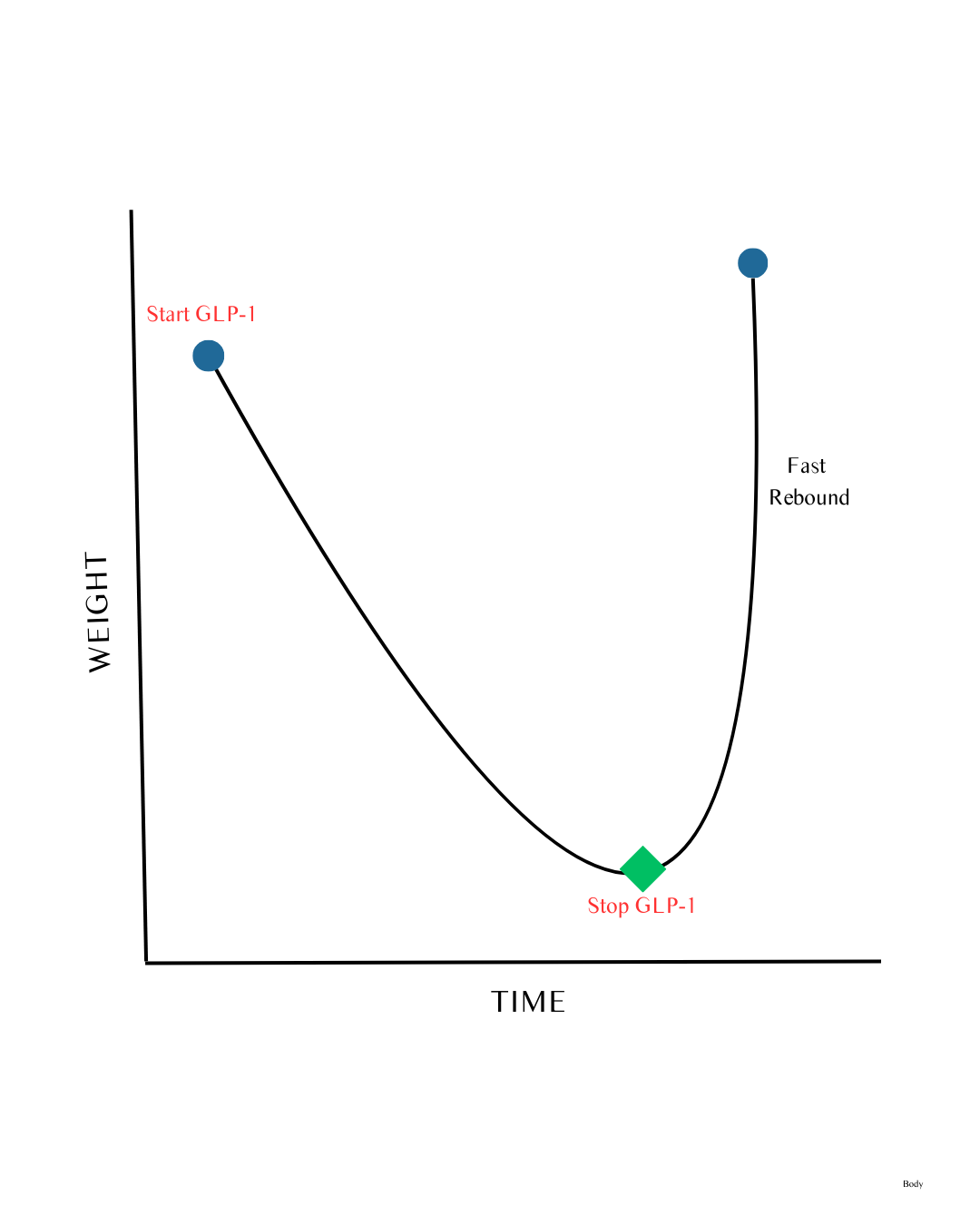
Why Weight Often Comes Back — And Comes Back Faster

One of the biggest misunderstandings about GLP-1 drugs is rebound weight gain.

This isn’t a failure of willpower.

Chronic appetite suppression leads to:

  • Loss of muscle mass
  • Lower resting metabolic rate
  • Increased energy conservation
  • Heightened hunger signaling after withdrawal

When the drug stops, the body doesn’t return to baseline —
it defends harder than before.

That’s not psychology.
That’s biochemistry.

Potential trade-offs of chronic GLP-1 use including digestion, gallbladder, muscle, mood, and sleep changes

The Hidden Trade-Offs People Don’t Talk About

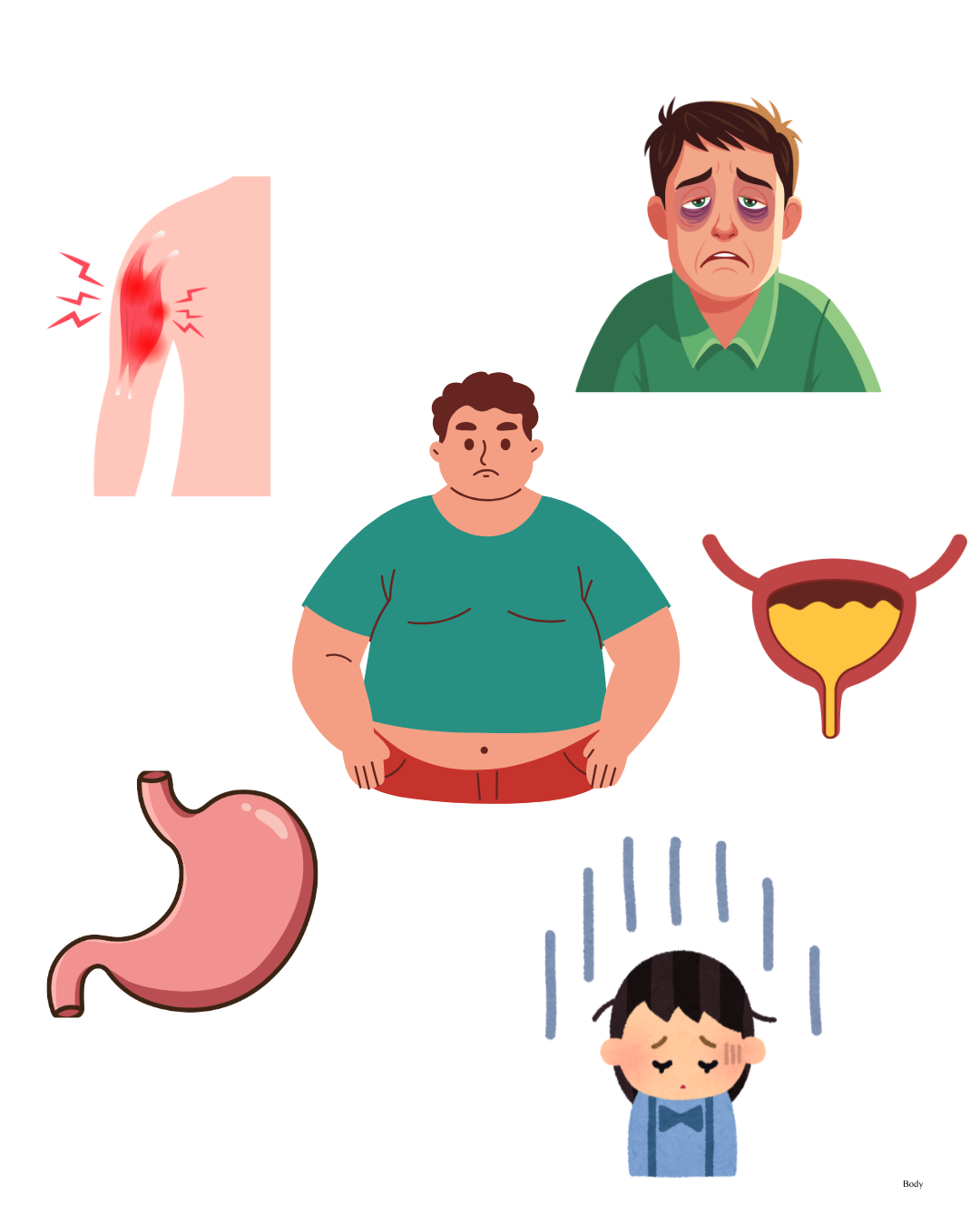
Most people hear about nausea and vomiting. Fewer hear about the longer arc.

Based on known physiology, prolonged GLP-1 stimulation predicts:

  • Slowed digestion and nutrient absorption
  • Gallbladder stress and gallstones
  • Lean muscle loss (sarcopenic weight loss)
  • Stress-hormone disruption and sleep changes
  • Mood flattening or emotional blunting in some individuals
  • Rebound hunger that feels “out of proportion” after stopping

These don’t appear overnight.
They emerge quietly, over time.

Sex-specific differences in metabolic response to GLP-1 medications

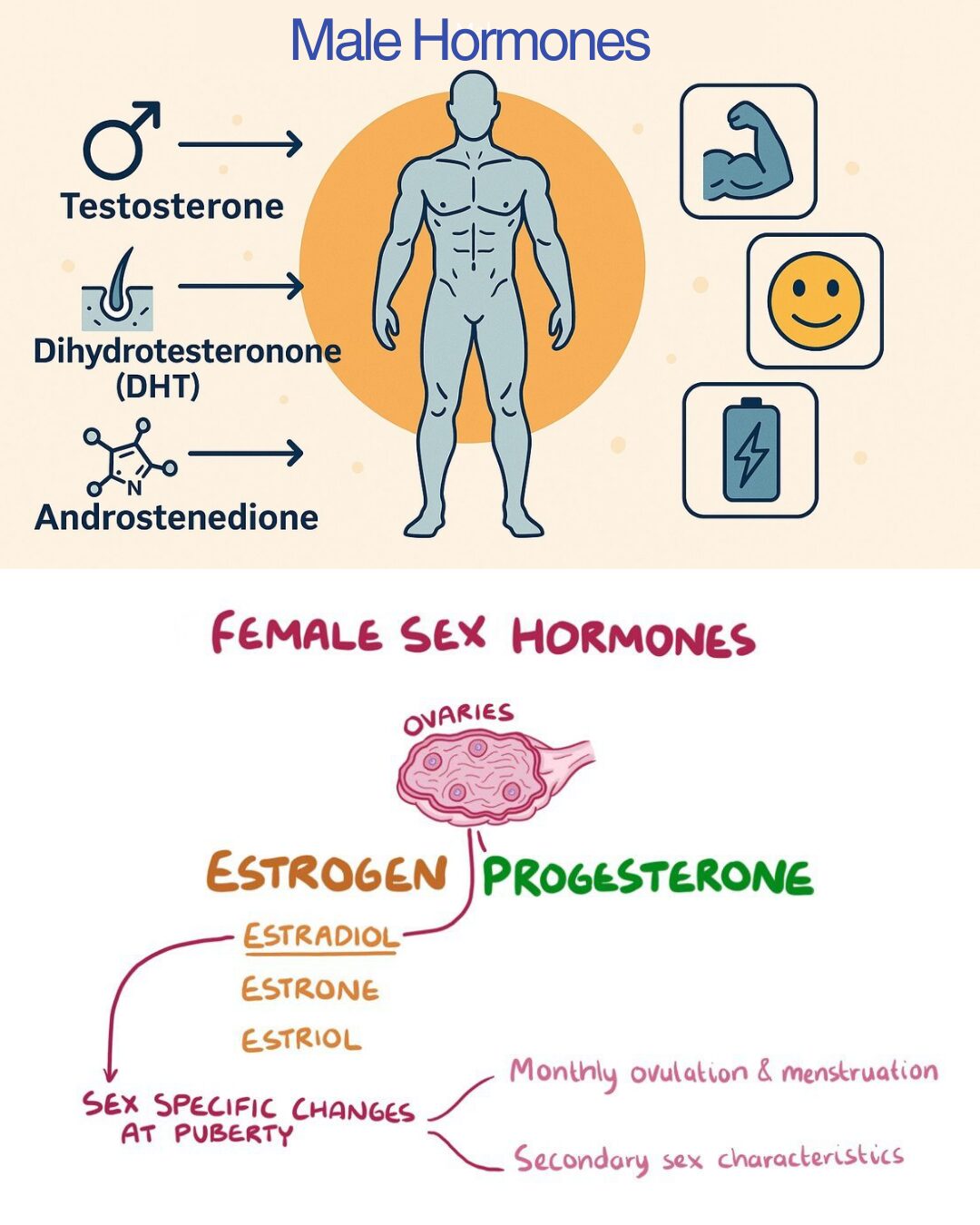
Men and Women Don’t Respond the Same Way

This matters — and it’s rarely discussed.

  • Women may experience menstrual irregularities and fertility disruption in low-energy states
  • Men often regain fat more centrally, with testosterone suppression after muscle loss

The same drug signal interacts with different hormonal environments.

Ignoring this leads to poor counseling and unrealistic expectations.


This Is Not an Anti-Drug Argument

Let me be clear:

GLP-1 medications have real clinical value, especially in diabetes and high-risk metabolic disease.

The mistake is pretending they are restorative rather than suppressive.

They don’t rebuild metabolic health.
They override it temporarily.

And biology always remembers.

Long-term health is not achieved by permanent suppression.

The Shortcut Fallacy

Modern medicine is increasingly tempted by shortcuts:

  • Suppress hunger
  • Bypass effort
  • Silence symptoms

Lon-term health is achieved by resilient systems:

  • Muscle
  • Mitochondria
  • Hormonal balance
  • Nervous system stability

Shortcuts borrow from these systems.
Eventually, repayment is required.

Dr. Bomi Joseph standing relaxed and smiling in his London office.

The Real Question Patients Should Ask

Not:

“How fast will I lose weight?”

But:

“What will my body look like after I stop?”

That answer matters more.

Long-term metabolic health requires resilient biological systems

Final Thoughts

GLP-1 drugs are powerful tools.
Power demands humility.

Used carefully, temporarily, and with biological respect, they may help some people reset a trajectory.

Used casually, chronically, or as lifestyle replacements, they risk creating metabolic fragility disguised as success.

Biology doesn’t punish shortcuts.
It simply adapts — and then asks for balance.

Quoted in New York Post health feature

Featured In

Published in Journal of Medical Phyto Research
Research published on ResearchGate

Research publications, interviews and quotes.

GLP-1 Video

If you prefer video, you can watch the short explanation here.

Educational guidance only. Not medical advice. 0 / 240